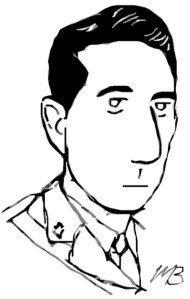
The School Builder

Lieutenant Colonel J. B. Mitchell
100th (Winnipeg Grenadiers) Battalion
Mitchell

His figure is as erect as of yore in defiance of his 88 years. He embodies the spirit of those Scarlet Riders who brought law and order to the plains, brought joy to law-abiding folk and spread dismay among the lawless. This picturesque personality is Col. J. B. Mitchell, clear-eyed, soft-spoken, alert as becomes those who are still interested in current events and “tomorrow.” His long service in military and civilian life has not drooped those massive shoulders, nor bowed the finely-posed head. Lacking but two inches of six feet, he is so well sot up that an observer would scarcely suspect his weight to be 200 pounds. That’s what athletic training and outdoor life will do for a busy man.

(Col. G. C. Porter, Winnipeg Tribune, 30 Nov 1940, 36)

James Bertram Mitchell was Architect and Commissioner of School Buildings and Supplies in Manitoba from 1892 until his retirement in 1928. Born on 14 October 1852 in Gananocque, Canada West, Mitchell was an adventurer, policeman and civic leader. At the age of fourteen, he volunteered as a bugler in the militia and participated in the Fenian Raid of 1866. During the second Fenian invasion scare in 1870, he guarded the Welland Canal at Cornwall. In 1874,  he joined the North West Mounted Police.
Continue reading

The Amputee

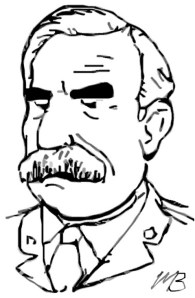
Lieutenant Colonel Ralph Webb, D.S.O., M.C.
47th (Western Ontario) BattalionWebb

A shell dropped in among the troops and twenty-two Winnipeg men and Col. Webb were wounded. Webb’s leg was completely severed near the hip. The colonel took out his pocket-knife and cut off the mangled remnants, then tied up his arteries with a shoelace. He afterwards underwent the necessary surgical operation without an anesthetic in Etaples field hospital. Recovering in England, he never used a crutch. He secured an artificial limb and left the hospital walking upon it. Within five months after his leg was blown off, he was back in France with his unit, with the artificial member.

(Winnipeg Tribune, 17 Nov 1924, 4)

Ralph Humphreys Webb succeeded Lieutenant Colonel M. J. Francis as commander of the 47th Battalion on 14 December 1917. In September 1914, the twenty-eight year old Webb had enlisted as a lieutenant with the Canadian Army Service Corps. Webb was born at sea on an ocean liner sailing from India on 30 August 1886. Raised in England, he immigrated to Canada in 1902.

Continue reading

The Ice Man

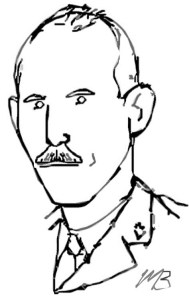
Lieutenant Colonel H. Marino Hannesson
223rd (Canadian Scandinavians) BattalionHannesson

Col. Hannesson thinks we should have a Canadian flag. He sets forth the case for it in much the same way we have seen it stated with monotonous repetition over a course of several years. The agitation comes from the same small source but sustained as it has been by a clique that arrogates to Itself the shaping of Canada’s destiny, nothing comes of It. It is a babbling stream that never lengthens, never widens, never rises. The people of Canada, broadly speaking, have taken no interest in it.

(Winnipeg Tribune, 24 Jan 1928, 9)

Born in Iceland on 27 November 1884, Hannes Marino Hannesson immigrated with his family to Manitoba in 1886. A graduate of the University of Manitoba, Hannesson practiced law in Winnipeg and Selkirk at the outbreak of the First World War. A member of the 90th Winnipeg Rifles, he enlisted as an officer with Lieutenant Colonel Hans Albrechtsen’s 223rd Battalion in March 1916.

Continue reading