Lieutenant-Colonel Jack Walford
5th Battalion, Seaforth Highlanders
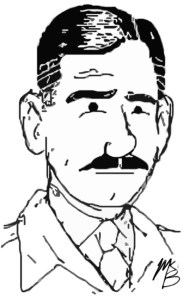
It is the custom in the army for the commander of an infantry battalion to complete an active tour of duty of a limited period, the idea being that if he has been doing his job properly and by some happy chance still remains alive at the end of it, the strain will have been so great that a fresh man should succeed him. Colonel Walford appeared to be made entirely of indiarubber and strong springs he had not been visibly affected by the rigours of leading the Battalion in every action from Alamein to Venlo; but his time was more than up, and he had to go.
(Alastair Borthwick, Sans Peur: The History of the 5th (Caithness and Sutherland), 297)
Born in Kensington, Middlesex on 4 May 1900, John Herbert Walford was commissioned in 1920 and became a lieutenant in the King’s Royal Rifle Corps before joining the Seaforth Highlanders. He was wounded and concussed while fighting during the Battle of France in June 1940. Scottish author Alastair Borthwick who served as intelligence officer with the 5th Battalion, would later write few could have foreseen “that quiet Major Walford was to lead the Battalion with such success in battle after battle that by the end of the war he would be a legend.”
 World War Graphic History