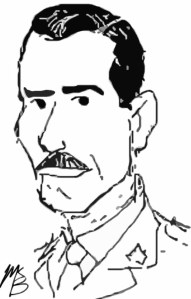
Lt-Col. T.W.A.H. Harrison-Topham

Lieutenant-Colonel T.W.A.H. Harrison-Topham
1/4th Battalion, King’s Own Yorkshire Light Infantry
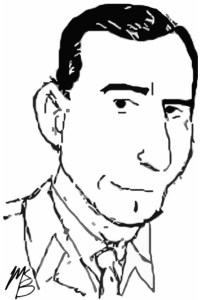
On New Year’s Day Lieut.-Colonel Harrison Topham, who had led the Battalion so gallantly from Normandy to Nijmegen, was unfortunately compelled to relinquish command owing to ill-health

(Harold Carmichael Wylly, History of the King’s Own Yorkshire Light Infantry, 156)

Born on 23 August 1903 in Greenwich, London, Thomas William Amyas Harrison Harrison-Topham was the son of Colonel Thomas Harrison-Topham who won the D.S.O. as a captain in Burma during the 1891-92 campaign. The younger Harrison-Topham took a commission with the King’s Own Yorkshire Light Infantry in 1924, served on the North West frontier in India, was promoted to captain in 1935. and became acting major in April 1940.

Continue reading

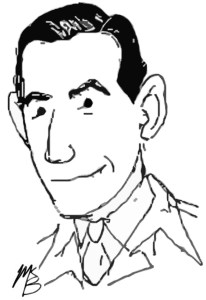
Lt-Col. E.D. Wardleworth

Lieutenant-Colonel E.D. Wardleworth
1/4th Battalion, King’s Own Yorkshire Light Infantry

Wuzzle Wardleworth had taken over as C.O. He was very good; why he was several times replaced after temporary command I shall never know. He moved the companies around fairly frequently in order to give everyone a turn in the comparatively quiet rear positions.

(Lewis Keeble, “A Worm’s Eye View: The 1/4 K e View: The 1/4 KOYLI in Normandy YLI in Normandy,” CMH, 6)

Edmund Douglas Wardleworth was born on 24 October 1914 in Sheringham, Norfolk, the same day his father, a Royal Army Medical Corps lieutenant, mysteriously drowned while on active service in France. The younger Wardleworth was commissioned into the King’s Own Yorkshire Light Infantry in 1935. He was aide-de-camp to the governor of Burma from 1938 to 1941. He fought as a company commander with the 2nd Battalion, KOYLI during the Japanese invasion of Burma in the 1941-42 campaign. When the commanding officer and second-in-command became casualties, Captain Wardleworth took over during fierce fighting in late February 1942.

Continue reading

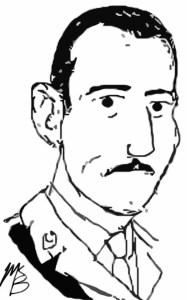
Lt-Col. C.D. Barlow

Lieutenant-Colonel C.D. Barlow
1/4th Battalion, King’s Own Yorkshire Light Infantry

Colonel Barlow is personally responsible for the initiation and development of an entirely new form of warfare which may well play an important part in future campaigns … His own immediate military advancement may well have been prejudiced by the time he has devoted to this special subject, but he has never permitted personal considerations to stand in the way of bringing his organisation to fruition.

(OBE citation, 1944)

Born on 4 February 1905 in Somersham, Cambridgeshire, Cecil Disney Barlow was commissioned into Shropshire Light Infantry after graduating from Royal Military College, Sandhurst in 1925. While part of the Army of Occupation on the Rhine in Germany, he named in a divorce suit by a British colonel, who alleged that his wife had an affair with the young lieutenant. During the early 1930s, Barlow served with the King’s African Rifles in Kenya. He completed staff college at Camberley in 1939 just as the Second World War began.

Continue reading

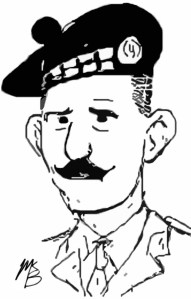
Lt-Col. M.A.H. Butler

Lieutenant-Colonel Mervyn Butler
2nd Battalion, Essex Regiment
1st Battalion, South Lancashire Regiment

He never hesitated to go where he felt his duty called him and when he flew in some danger in a helicopter to make contact with the local authorities with whom he hoped he might organise a cease fire, but without avail … His Brigade has been completely cheerful and supremely confident and splendidly trained and his own inspiring efforts have shown him to be a leader second to none and in action upholding the very highest tradition of the British Army.”

(D.S.O. Bar, citation, 13 Jun 1957)

Born in Toronto, Ontario on 1 July 1913, Mervyn Andrew Haldane Butler was commissioned in the Prince of Wales’s Volunteers (South Lancashire Regiment) in 1933 after attending Royal Military College, Sandhurst. He served with the 1st Battalion during the Battle of France in 1940 and earned the Military Cross. Under heavy machine gun and mortar fire, he gathered as many soldiers as he could to drive the enemy out of their position. His name appeared in the newspapers again later that year when a British Army major sued his wife for divorce on the grounds of adultery with Butler, who later married the divorcee, Marjorie Millicent Dann, in 1941.

Continue reading

Lt-Col. F.P. Barclay

Lieutenant-Colonel Peter Barclay
4th Battalion, Lincolnshire Regiment
1st Battalion, Royal Norfolk Regiment

It was absolutely wonderful and a thrilling feeling to experience the spirit of the chaps who are with you—it is intangible—but its the most exhilarating, potent influence. It revives you, you can never feel tired, you never feel depressed when you have a spirit round you like the spirit we enjoyed. And the whole thing was treated as a jolly-well, worthwhile job that has to be done.

(Barclay, interview, 21 May 1984) https://www.iwm.org.uk/collections/item/object/80007993

Born in Cromer, Norfolk, England on 8 March 1909, Francis Peter Barclay was commissioned with the Norfolk Regiment in 1929 after attending Twyford School and Royal Military College, Sandhurst. Of his decision to join the army, he explained decades later, “I thought it was a wonderful life … and I never regret it from that day to this.” After service in India, he was posted with the 2nd Battalion to Gibraltar just before the outbreak of the war. He served as company commander when the battalions went to France in September 1939. He received the Military Cross for leading a three-man patrol into enemy lines on the night on 3/4 January 1940.

Continue reading

Lt-Col. D.A.D. Eykyn

Lieutenant-Colonel D.A.D. Eykyn
11th Battalion, Royal Scots Fusiliers

Lt-Col. Eykyn has shown outstanding leadership and enthusiasm as a commanding officer. It has been largely due to his leadership that his bn has been uniformly successful in their actions against the enemy; in fact he has never suffered a reverse.

(D.S.O. citation, 10 Feb 1945)

Born in British India on 11 August 1906, Duncan Arthur Davidson Eykyn was an officer in the Royal Scots since 1926. His father, Captain Gilbert Davidson Pitt Eykyn (1881—1915) had been commissioned a second lieutenant in 1899, served in the Boer War, and after a time with the Indian Army, joined the Royal Scots (Lothian Regiment) in 1905. He was killed in action at Second Ypres on 24 April 1915, while attached to the 4th Battalion, Alexandra Princess of Wales Own Yorkshire Regiment. A staff sergeant remarked, “Our gallant little adjutant was one of the first to fall. When the order was given to charge, the Germans ran away like cowards, and refused to face our boys’ cold steel.” The younger Eykyn followed his late father’s military career in the Royal Scots. He served as battalion adjutant and rose to captain by 1937.

Continue reading