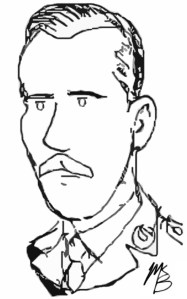
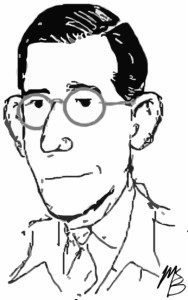
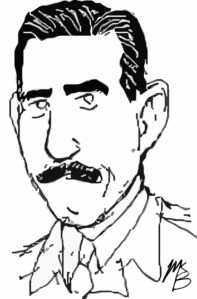
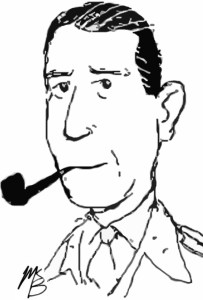
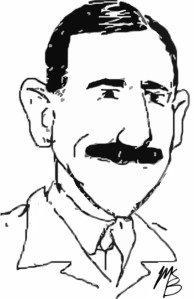
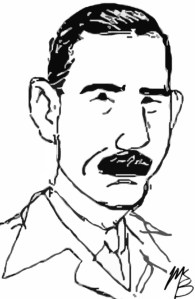
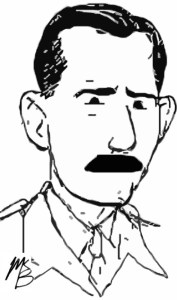
Lt-Col. C.D. Barlow

Lieutenant-Colonel C.D. Barlow
1/4th Battalion, King’s Own Yorkshire Light Infantry

Colonel Barlow is personally responsible for the initiation and development of an entirely new form of warfare which may well play an important part in future campaigns … His own immediate military advancement may well have been prejudiced by the time he has devoted to this special subject, but he has never permitted personal considerations to stand in the way of bringing his organisation to fruition.

(OBE citation, 1944)

Born on 4 February 1905 in Somersham, Cambridgeshire, Cecil Disney Barlow was commissioned into Shropshire Light Infantry after graduating from Royal Military College, Sandhurst in 1925. While part of the Army of Occupation on the Rhine in Germany, he named in a divorce suit by a British colonel, who alleged that his wife had an affair with the young lieutenant. During the early 1930s, Barlow served with the King’s African Rifles in Kenya. He completed staff college at Camberley in 1939 just as the Second World War began.

Continue reading

Lt-Col. G.F. Eadie

Lieutenant-Colonel Fraser Eadie
1st Canadian Parachute Battalion

I always believed that I must lead them or I couldn’t live with myself. The only way to be promoted was if I was held in good esteem by my men. I never asked them to do anything I wouldn’t do myself.

(Quoted in Bernd Horn, Intrepid Warriors, 245)

Born in Winnipeg on 20 July 1917, George Fraser Eadie worked for the Ford Motor Company and played hockey before enlisting with the Royal Winnipeg Rifles as a second lieutenant in 1940. He had joined the army rather than pursue an opportunity to play for the Chicago Black Hawks. After advancing to captain and then major, he qualified as a paratrooper and volunteered for the newly formed 1st Canadian Parachute Battalion in 1942.

Continue reading

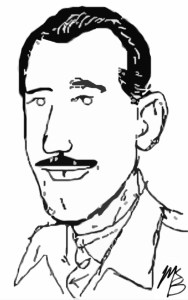
Lt-Col. J.A. Nicklin

Lieutenant-Colonel Jeff Nicklin
1st Canadian Parachute Battalion

Colonel Nicklin was a by the book commander, absolutely no quarter given and he had no compassion for defences that were mounted … the number of soldiers punished severely for what might be minor infractions gave the colonel the un-kind title of ‘Tyrant.’”

(Quoted in Bernd Horn, Intrepid Warriors, 240)

Born in Winnipeg on 10 December 1914, Jevon Albert Nicklin was a football player for Winnipeg Blue Bombers and won the Grey Cup with the team in 1935 and 1939. He was commissioned second lieutenant in August 1940 and joined the Royal Winnipeg Rifles before volunteering to be a paratrooper two years later. He became second-in-command of the 1st Canadian Parachute Battalion where he earned a reputation as a disciplinarian, “tough as hell”

Continue reading

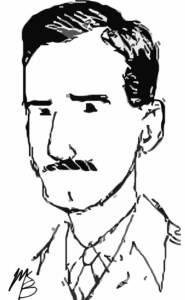
Lt-Col. G.F.P. Bradbrooke

Lieutenant-Colonel G.F.P. Bradbrooke
1st Canadian Parachute Battalion

No matter how many jumps a fellow makes, he’s scared. He jumps from a height of 400 feet, and has about nine seconds to reach the ground. There isn’t time to make mistakes.

(Quoted in Star Phoenix, 25 Sep 1942, 3)

Born in Yorkton, Saskatchewan on 14 March 1912, George Frederick Preston Bradbrooke was a graduate of the University of Saskatchewan and an accountant in Regina. The son of a First World War colonel, he was also nephew of Brigadier G.R. Bradbrooke of 5th Armoured Brigade. He mobilized with the Saskatoon Light Infantry in 1939 and participated in the bloodless Spitzbergen raid of August-September 1941.

Continue reading

Maj. H.D. Proctor

Major Hilton D. Proctor
1st Canadian Parachute Battalion

The training is very interesting now, and today I took my first jump from the 250-foot tower. It was a grand sensation and I landed very gently. Friday, we pack our own chutes and Monday we jump from the aircraft. I am looking forward to it and so are all the others.

I am taking an evening off and going into Columbus to see ‘Ship Ahoy.’ I believe it is a comedy and I need a laugh.

(Proctor letter 1 Sep 1942, quoted in Ottawa Citizen, 9 Sep 1942, 1)

Born in County Down, Ireland on 20 August 1911, Hilton David Proctor was a graduate of the University of Ottawa, a Bell Telephone engineer and member of the Royal Canadian Corps of Signals since 1927. He mobilized as a captain in August 1940 and advanced to major in May 1942. In July, he assumed command of the nucleus for the newly formed 1st Canadian Parachute Battalion which was sent for training in Fort Benning, Georgia.

Continue reading

Lt-Col. R.G. Pine-Coffin

Lieutenant-Colonel Geoffrey Pine-Coffin
3rd Parachute Battalion,
7th (Yorkshire) Parachute Battalion

Lieutenant-Colonel Pine Coffin, he was—and I’m not saying this because I’m being taped—he was the finest officer that any man can wish for … He was for the men. He wasn’t one of those ‘oh because I’m an officer, I’m above you’ … He never degraded you.

(Walter Tanner, IWM interview, 31 Jul 1990)

Born on 2 December 1908 in Portledge Manor, Bideford, Devon, Richard Geoffrey Pine-Coffin graduated from Eton and Trinity College, Cambridge. He was commissioned into the Devonshire Regiment in 1928 and mobilized with the 2nd Battalion, Duke of Cornwall’s Light Infantry. He served in the Battle of France and after Dunkirk joined the 11th Devons as a major.  His compound family name led soldiers to dub him “Wooden Box” as the dead were typically buried in simple coffins made of pinewood.

Continue reading

Lt-Col. T. Otway

Lieutenant-Colonel Terence Otway
9th Parachute Battalion

The more I think about it the more I wonder how in the devil we did it … It was this fantastic training that saved us. I can’t believe we could have pulled it off otherwise … It was an appalling shambles and only Good knew what lay in store for us. I asked myself, do I pack up or do I go on? It had been stressed to me how vital it was to see the thing through. So I really had no option but to have a go.

(Quoted in Brimingham Post, 6 Jun 1969, 24)

Born on 15 June 1914 in Cairo, Egypt, Terence Brandram Hastings Otway was educated at Royal Military College, Sandhurst and took a commission with 2nd Battalion, Royal Ulster Rifles in 1934. He served overseas in Hong Kong, Shanghai, and on the North West frontier in India. Following staff college and War Office duties in London, he transferred to the airborne forces in August 1943 and later became second-in-command of the 9th Parachute Battalion under Lieutenant-Colonel Martin Lindsay. Just months before D-Day, Otway had taken commander under inscrutable circumstances.

Continue reading

Lt-Col. A.S. Pearson

Lieutenant-Colonel Jock Pearson
1st Parachute Battalion
8th (Midlands) Parachute Battalion

I do not believe that there is any man, who, in his heart of hearts, would not rather be called ‘brave’ than any other virtue attributed to him. This elemental and reasoning attitude is a good one. Because courage is not merely a virtue but is THE virtue. Without courage, there are no other virtues. Faith, hope and charity, and all the rest, don’t become virtues unless you have the courage to exercise them.

(Pearson lecture quoted in Julian James, A Fierce Quality, 118)

Born on 1 June 1915 in Glasgow, Scotland, Alastair Stevenson “Jock” Pearson was educated at Kelvinside Academy and worked as a baker during the Great Depression before joining the Territorial Army. He rose to become one of the youngest battalion commanders in the British Army. “Gentlemen, do what you are told and stay alive,” he would stress to his officers. “Remember, there will be no bloody medals in this battalion.” Yet with four D.S.O.’s and one Military Cross, Pearson ended the war as one of the most highly decorated officers.

Continue reading

Col. W. Dec

Colonel Wladyslaw Dec
3rd Rifle Brigade

‘To hell with women just now — what I need is a bridge! Report your discovery to the General.’ I shouted somewhat un-gallantly. I forgot that the world is small and while a mountain might not meet up with another, people are in fact likely to meet again. Also, I didn’t think that one day people would remember that I preferred a bridge to women.

(Quoted in Dec, Narvik and Falaise, 377-9)

Born on 13 February 1898 in Sokołów Małopolski, Władysław Dec was drafted into the Austro-Hungarian Army during the First World War and was commissioned a second lieutenant in 1916. He joined the newly formed Polish Army in November 1918 and fought during the wars of independence. After the September 1939 campaign, Major Dec escaped with his brigade to France via Hungary and the Balkans.

Continue reading

Lt-Col. K. Complak

Lieutenant-Colonel Karol Complak
1st Podhale Rifles Battalion

Without Lieutenant Colonel Complak’s presence, this attack on very heavily defended enemy’s position, would have been very costly, both in men and time lost. Throughout the fighting in France, Belgium, Holland and Germany, Lieutenant Colonel Complak has shown great coolness and personal bravery and been an example of true Soldier’s bravery on the Battlefield.”

(D.S.O. citation, 28 June 1945)

Born on 20 November 1899, Karol Józef Complak was a veteran of the First World War, having served in the Polish Legions while attached to the Austrian Army. By November 1918, he joined the newly created Polish Army and participated in the Polish–Ukrainian War then the Polish-Soviet War. A major by the outbreak of the Second World War, he escaped into Romania then made his way to France.

Continue reading