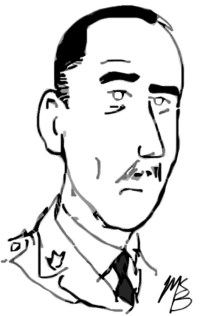
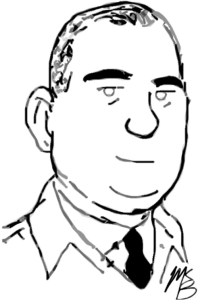
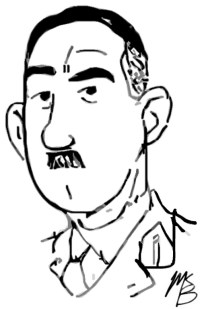
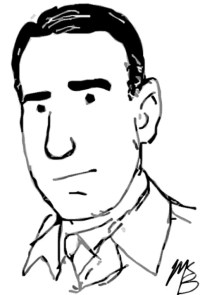
Lt-Col. M.W. McA’Nulty

Lieutenant-Colonel Matthias McA’Nulty
27th Armoured (Sherbrooke Fusilier) Regiment
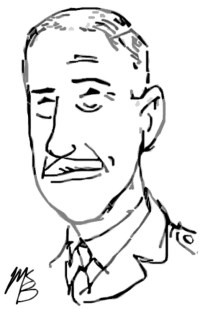
McANulty

Col. M.W. McA’Nulty, Canadian officer chosen to take back Hong Kong and evacuate Canadian prisoners of war in Japan, told … it was not the atomic bomb which made the Japs call it quits, but the terrible pounding they took from the American B-29’s.

(St. Johnsbury Republican, 22 Mar 1946, 1)

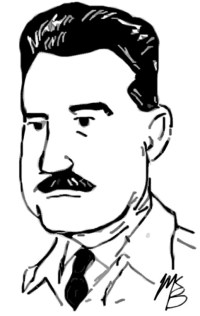
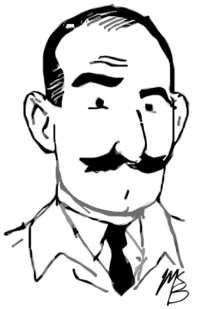
Born on 17 February 1893 in Point Alexander, Ontario, Matthias William Cyrus McA’Nulty was a stockbroker in the Eastern Townships of Quebec, commandant of the Cadet Officer Training Corps at Bishop’s College and commanding officer of the Sherbrooke Regiment from 1924 to 1930. During the First World War, he had enlisted with the Railway Construction and Forestry Depot as a lieutenant in August 1917 and went to France on a draft to the Canadian Machine Gun Corps a year later. McA’Nulty took command of the Regiment again in 1939.
Continue reading

Lt-Col. E.M. Wilson

Lieutenant-Colonel E.M. Wilson
10th Armoured (Fort Garry Horse) Regiment
WilsonEM

His relations with the other arms throughout could not be improved upon. His never failing willingness to help, and his quick appreciation of the difficulties faced by the infantry greatly eased the task of every infantry commander. LCol Wilson by frequently visiting the forward areas, which involved trips of a most hazardous nature over routes only partially cleared of the enemy, was always completely “in the picture” when called upon to undertake a new task.

(D.S.O. citation war diary, 16 Jun 1945)

Born on 1 March 1901 in Goderich, Ontario, Eric MacKay Wilson was a former school teacher and newspaper publisher. In 1939, he became managing editor of the Toronto office for the Montreal Star. A cadet instructor during the First World War, he was commissioned in the militia in 1924 and volunteered for active service in 1940. Following overseas training with an armour unit in England, he joined the Fort Garry Horse as a squadron commander.

Continue reading

Lt-Col. R.E.A. Morton

Lieutenant-Colonel Ronald Morton
10th Armoured (Fort Garry Horse) Regiment
Morton

He commanded our respect, our obedience and our love. On leaving he reported Officers are the soul of a Regt, the Sgts are its backbone. To write a biography of Col., MORTON is impossible here, but surely it may be and should be done elsewhere. “If I have built a good foundation, the Regt will be just / as well off without me.”

(FGH war diary, 28 Aug 1944)

Born in Toronto on 12 December 1900, Ronald Edward Alfred Morton graduated from RMC in 1923 and joined the Permanent Force. In October 1941, he transferred from second-in-command of the Lord Strathcona’s Horse to replace Lieutenant-Colonel S.J. Cox of the Fort Garry Horse. Despite eighteen years in Winnipeg with the LdSH, he was still viewed as an outsider but soon accepted as a “synthetic westerner.” He would serve as commanding officer for the unusually long period of almost three years, and led the FGH Tanks in the invasion of Normandy on 6 June 1944.

Continue reading

Lt-Col. S.J. Cox

Lieutenant-Colonel S.J. Cox
10th Armoured (Fort Garry Horse) Regiment
Cox

Everybody seemed to be in uniform. Women were much in evidence in all kinds of work and very enthusiastic about it. Traveling around, I found no names or directions, not even on stations. One has to follow a map; it’s very difficult at night in blackouts.

(Cox quoted in Winnipeg Tribune, 29 Oct 1942, 9)

Born in Kildare, Ireland on 5 July 1885, Samuel Joseph Cox had served three years with the South Irish Horse and belonged to the Fort Garry Horse since 1913 shortly after immigrating to Canada. A Winnipeg accountant, he volunteered as a lieutenant in August 1916 and served two years in France with the FGH. He became commanding officer in November 1936, when the unit was amalgamated with the Manitoba Horse.

Continue reading

Lt-Col. W.D. Brooks

Lieutenant-Colonel W.D. Brooks
6th Armoured (1st Hussars) Regiment

Major Brooks displayed outstanding leadership and inspiration to his squadron and is responsible for having placed a large proportion of his special assault tanks on the beach despite all hazards of weather, beach obstacles and enemy action. He immediately attacked the beach defences with great courage and skill which made it possible for the assault infantry to land on the beach and go forward to gain their objectives.

(D.S.O. citation, 31 Aug 1944)

Born on 2 June 1908 in Brantford, Ontario, William Dudley Brooks commanded “A” squadron of the 1st Hussars on D-Day. Launching experimental DD or Duplex Drive tanks proved a serious challenge for the squadron under difficult weather conditions and rough seas. Despite a late landing and several sunk tanks, Brooks directed seven DD tanks in support of the Royal Winnipeg Rifles, earning a D.S.O.: “The action and leadership of this officer largely influenced the success of the assault landing and the gaining of the beach head.”

Continue reading

Lt-Col. F.E. White

Lieutenant-Colonel Frank White
6th Armoured (1st Hussars) Regiment
White

When he landed on the beach on D-day between Courseulles-sur-Mer and Bernières-sur-Mer no exits had been completed and the beach was under heavy enemy mortar and machine gun fire and traffic was piling up. He got out of his tank and walked calmly up and down the beach endeavouring to find an exit. His example of complete coolness at that critical time was an inspiration to the officers and men of the regiment. His actions since D-day have continued to be outstanding to the highest degree.

(D.S.O. citation, 19 Apr 1945)

Born on 24 May 1909 in St-Faustin, Quebec, Franklyn Everhart White was the son of General John Burton White, head of the Canadian Forestry Corps. In the last war the elder White had commanded the 242nd Battalion and then served as Director of Timber Operations in the Canadian Forestry Corps. Following his father’s military service, Frank White graduated from RMC and joined the Permanent Force, taking a commission with the Lord Strathcona’s Horse in Winnipeg.

Continue reading

Lt-Col. R.J. Colwell

Lieutenant-Colonel Ray Colwell
Halifax Rifles
6th Armoured (1st Hussars) Regiment
Colwell

During this action Lt-Col Colwell organized and fought his Regiment with great determination and courage. His own tank was shot from under him, so he continued to direct from on foot … By his courage and determination he set an excellent example to all rank and fostered the fighting spirit of his Regiment.

(D.S.O. citation, 12 Jul 1944)

Born on 11 August 1899 in Halifax, Nova Scotia, Ray John Colwell was a businessman, retail clothier, and a former rugby and hockey player. He had joined the Halifax Rifles in 1917 and during the final stage of the First World War went to France just after the armistice as a lieutenant in the Canadian Machine Gun Corps. As commanding officer of the Halifax Rifles in September 1939, Colwell organized the mobilization of the regiment, and remained in command almost the next four years.

Continue reading

Lt-Col. R.H.F. Back

Lieutenant-Colonel R.H.F. Back
6th Armoured (1st Hussars) Regiment
Back

We’re playing for keeps and we have to be a crack outfit. We know what those German panzers can do and we’ve been training ourselves accordingly. I’ve been to England. I’ve seen the Canadian troops in England and I would say this armored division won’t take second place to any of them.

(Ottawa Citizen, 24 Nov 1941, 24)

Born in London, Ontario on 27 May 1905, Ronald Henry Franklin Back was commissioned in the 1st Hussars in 1927 and promoted to major in 1938. After a six month attachment to the British Armoured Corps for training, he returned to Canada in March 1941. The next month he assumed command of the 6th Armoured Regiment, which had been redesignated from the 1st Hussars. He replaced Lieutenant-Colonel A.C. Spender on his promotion to command the 2nd Army Tank Brigade.

Continue reading

Brig. A.C. Spencer

Brigadier A.C. Spencer
1st Canadian Cavalry (1st Hussars) Regiment
2nd Army Tank Brigade
Spencer

This officer has made a noteworthy contribution in the development and administration of this large camp and particularly in training of Armoured Corps personnel. His services in all regards have been outstanding and he is worthy of high recognition.

(C.M.E. citation, 10 Jun 1944)

Born in London, Ontario on 19 November 1887, Alexander Charles Spencer was a mechanical engineer who had been commissioned in the 1st Hussars in 1911. In the Frist World War, he enlisted with the 7th Canadian Mounted Rifles as a lieutenant in March 1915 and served in the field with the Canadian Light Horse as paymaster and quartermaster. After the war he became a lieutenant-colonel in the Canadian Engineers and retired to the reserve list in 1937.

Continue reading

Lt-Col. K.D. Landell

Lieutenant-Colonel K.D. Landell
Royal Canadian Dragoons
Landell

These incidents are just two of many by which Lieutenant-Colonel Landell, by his inspiring and cheerful leadership, his example and his disregard for his own safety, has been largely responsible for the successful operation of his regiment. As a result the morale and performance of his troops have been of the highest standard for the whole of his ten months tenure of command.

(D.S.O. citation, 4 Apr 1945)

Born in Toronto on 2 November 1913, Keith Dalhousie Landell was a graduate of the University of Toronto and commissioned with the McGill Canadian Officer Training Corps. He mobilized with the Royal Canadian Dragoons and went overseas in 1941. By the time the unit deployed to Sicily in November 1943, had become second-in-command.

Continue reading