Lieutenant-Colonel Ian Mackenzie
6th Battalion, Royal Scots Fusiliers
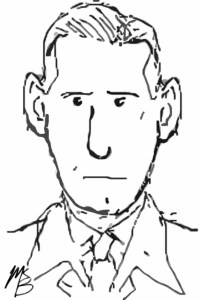
I went on to tea with 6th Royal Scots Fusiliers, which was commanded by Winston [Churchill] for a time in the last war. Ian Mackenzie, who has been C.O. for the last six months, is a great little man. He’s only thirty and has done brilliantly. But I wouldn’t have recognised him for the gay, handsome chap he was when we two crossed the Channel together to join the B.L.A. on that sunny July day so many years ago. He looks ten years older; in fact, I had to look at his badges of rank when he came into the room. He admits he always feels tired nowadays.
(Martin Lindsay, So Few Got Through, 254)
Born in Johannesburg on 7 September 1914, Ian Mackenzie was a partner in a South African accounting firm. He had been educated in Scotland and obtained a degree in philosophy and economics from Pembroke College, University of Oxford in 1935 before returning to his home country. A prewar officer in the Transvaal Scottish Regiment, Mackenzie transferred to the 4/5th Battalion, Royal Scots Fusiliers while visiting London on business in September 1939. He served as a lieutenant during the Battle of France and was on the last ship to evacuate Cherbourg ahead of the advancing German forces.
He was soon promoted to captain and battalion adjutant before completing junior staff college. He soon became GSO 2 instructor at the Camberley staff college and married in the United Kingdom. Eager to get back into action as Allied forces landed after D-Day, Mackenzie requested an infantry posting to France. In July 1944, he was assigned to be a replacement second-in-command for one of the depleted unit in the 227th (Highland) Infantry Brigade. Major Martin Lindsay, who was in the same situation as a reinforcement officer, recorded:
I found Ian Mackenzie, who had crossed with me, in a group of officers. We asked about the fighting which had lately taken place. Then one of them said, “Fifteenth Scottish Division is attacking to-night. They cross the start line at 1 a.m.” This was a nasty shock for Ian, as his posting is to a Highland Light Infantry battalion in that division. He hurried off to the Town Major’s office to try to borrow a jeep, and I felt very sorry for him being pitched into a night attack within an hour or two of joining.
During the attack that night, Lieutenant-Colonel J.D.S. Young of the 10th Highland Light Infantry was wounded, and Mackenzie, “fresh from the classroom of the staff college” took temporary command until a new CO arrived. In August 1944, Mackenzie took command of 6th Battalion, Royal Scots Fusiliers after Lieutenant-Colonel C.R. Buchanan had been wounded. For exceptional leadership over the next month, he earned the D.S.O.:
By this time three bns of the Brigade were occupying the bridgehead and in the confused and heavy fighting subunits of all bns became intermingled. Lt Col Mackenzie took charge of the situation and personally directed the re-organisation of the defences … Lt Col Mackenzie constantly exposed himself to heavy and often intense enemy fire with a complete contempt of danger, and by his courage and coolness gave an inspirating example not only to his own unit, but to other units with whom he was in contact. This officer’s conduct under fire and during difficult and dangerous conditions is beyond praise.
Mackenzie led the 6th Royal Scots from the drive into Belgium and liberation of the Netherlands through to the invasion of Germany and the end of the war. His battalion intelligence officer wrote a tribute following his death in 2000:
From my personal observation as his IO in Autumn 1944 in Belgium and Holland, he was an incomparable Battalion Commander. As he was only 30 years old, he must have been one of the youngest in NW Europe. Immaculate whatever the weather and battle situation, he was always in complete control, making a clear and full appreciation of the situation. His “O” groups were always concise but with clear attention to detail, without reference to a single quote. If anything (rarely) went wrong, he was immediately ready with a change of plan from sure foresight, no doubt from Staff College experience …
It must be true to say our magnificent Regiment has never in its history had a finer or more courageous Battalion Commander.
(Journal of The Royal Highland Fusiliers, 2000, 21)
Mackenzie demobilized in 1946 and returned with his wife to South Africa where he established a successful business career. He received an honorary doctorate of laws from Rhodes University before being appointed chancellor from 1977 to 1990. He died on 31 July 2000.
 World War Graphic History