Lieutenant-Colonel J.E.F. Willoughby
2nd Battalion, Middlesex Regiment
2nd Battalion, Dorsetshire Regiment
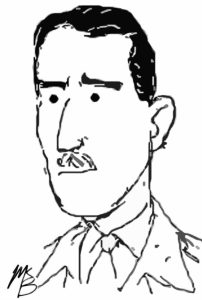
His huge experience, incisive mind and wicked sense of humour (he once swam the length of a swimming pool in a dinner jacket and more recently fired a potato from a model ballista at a less than well-liked retired officer) brought cheer in later life to his younger friends and doubtless to his men in earlier days. He never allowed his status to come between himself and the common man and all who knew him were enriched by his humanity.
(Wiltshire archaeological and natural history magazine, 1991, 185)
Born on 18 June 1913 in Stroud, Gloucestershire, John Edward Francis Willoughby, was commissioned into the Middlesex Regiment after graduating from Royal Military College, Sandhurst in 1933. He served with the 2nd Battalion during the Battle of France in 1940 and became its commanding officer in 1943. In October of that year, he joined a War Office military mission on a tour of Australia and Burma.
Willoughby praised Australian troops for excelling at jungle warfare, adding, “They have complete contempt for the Japs, both as an animal and as a soldier.” He would, however, later see service in North West Europe not the Pacific theatre. On 24 June 1944, Lieutenant-Colonel E.A.M. Norie of 1st Battalion, Dorsetshire Regiment died of wounds, and Willoughby took over a few days later.
Only a few weeks later, Willoughby’s needed to be hospitalized for ill health. Command passed on Major A.E.C. Bredin, who was confirmed as his successor on 9 July. Although his Second World War combat service had been cut short and would need to revert in rank as part of the postwar army, he went on to command a company of the Middlesex Regiment in the Korean War. He later commanded the 1st Battalion in the 1950s and became colonel of the regiment from 1959 to 1965. His final posting was general officer commanding Middle East Command, before retirement and a knighthood in 1967.
Beyond his miliary career, other interests including painting and archaeology. He died on 23 February 1991 in Warminster, Wiltshire.
 World War Graphic History