Lieutenant-Colonel “Tommy” Harris
2nd Battalion, Royal Ulster Regiment
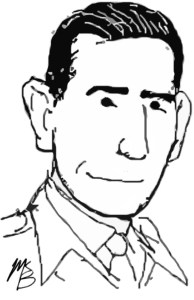
Lieutenant-Colonel Harris has commanded his battalion since D Day, His leadership, example, and coolness under fire have been a source of inspiration to his battalion. In the battles for Cambes, Caen, and Troarn, he was invariably to be found in the forefront of the battle encouraging his men in spite of the heavy fire through which the battalion had always to advance.
(D.S.O. citation, 14 Feb 1945)
Born on 7 July 1910 in County Tipperary, Ireland, Ian Cecil Harris was commissioned with the Royal Ulster Rifles in 1930 after attending Royal Military College, Sandhurst. He served with the 2nd Battalion in Sudan, and the 1st Battalion in Palestine, Egypt and Hong Kong. In the late 1930s, he was posted to Shanghai and then served in India on the North West Frontier. By 1941, he had complete staff college at Camberley and became brigade major for the 129th Infantry Brigade.
In August 1943, he was appointed commanding officer of 2nd Battalion, Royal Ulster Rifles. Ten months later, he led the unit in the Normandy landings and earned the Distinguished Service Order: To see their commanding officer behaving in such a calm and collected manner and with total disregard of his own personal safety, undoubtedly spurred on the men. During the long period of shelling between battles, his cheerfulness and coolness went a long way towards keeping up the high morale of the battalion.”
By January 1945, he had relinquished command of the 2nd RUR on being assigned to the headquarters staff of the 25th Indian Division in the Burma campaign. The battalion newsletter “The Harp” paid tribute to the respected commanding officer: “Today we say an revoir to our C.O. and friend Lt-Colonel I. C. Harris. Everyone of us feels with him, disappointment at his departure from the Battalion. He knitted us into a close fraternity. More so, perhaps, than any unit in any Army. Many of us do not spring from his beloved Ireland. Yet it is due to his team building spirit that we are ‘Stickies’ to the core; our regard for the Battalion is second to none … Wherever Lieut. Colonel Harris may be, the affinity between him and this Battalion will continue. We wish him great success in his new post.” He was succeeded by Major John Drummond.
During the late 40s and 50s, Harris served in India, Pakistan and Malaya, where he command a brigade in anti-insurgent fighting during the Emergency. In 1966, he was appointed general officer commanding Northern Ireland Command and retired from the army three years later. He was colonel of the Royal Ulster Rifles from 1962 to 1968 and was then first colonel of the newly amalgamated Royal Irish Rangers from 1970 to 1972.
Harris died on 12 March 1999 in Dublin, Republic of Ireland.
 World War Graphic History