Lieutenant-Colonel J.A. Wilson
Winnipeg Grenadiers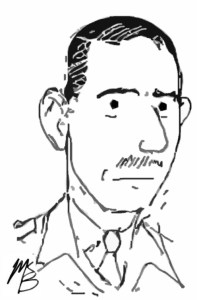
The dead silence of that island in the half-light and the absolute lack of any sign of life as the men went ashore made everyone think the Japs had pulled inland and were waiting to trap us on the beach.
(Quoted in Times Colonist, 27 Jan 1944, 8)
Born in 1896, raised in Calgary, and educated in Scotland, James Anderson-Wilson was a First World War veteran of the Royal Air Force and a manager for the Hudson’s Bay Company in Winnipeg. A prewar militia officer with the Royal Winnipeg Rifles, he served as second-in-command overseas until being recalled to Canada in April 1942. He took command of the reformed and rebuilt 1st Battalion, Winnipeg Grenadiers, which had been destroyed at the Battle of Hong Kong five months before.
In November 1941, “C Force” comprising the Grenadiers and the Royal Rifles of Canada arrived to reinforce the British garrison at Hong Kong. The next month Japanese forces attacked, and the colony fell on Christmas Day. All Canadian soldiers were killed or captured, and Lieutenant-Colonel J.L.R. Sutcliffe of the Grenadiers died in a prisoner of war camp on 6 April 1942. Wilson was appointed new commanding officer of the recreated battalion that month and returned to Winnipeg from England. The Grenadiers served with the Pacific Command in the 13th Infantry Brigade, 6th Division.
The brigade participated in the final stage of the Aleutians campaign, during the landings at Kiska Island on 15 August 1943. After the Americans experienced brutal close quarter fighting at the Battle of Attu in May, the United States and Canadian forces expected similar Japanese resistance at Kiska. “Once you hit that beach it is your ground either standing up or lying down,” Wilson told the Grenadiers prior to making landfall. “Good luck to you all and remember Hong Kong.” Instead, as the troops fanned out across the Alaskan island, they discovered that the Japanese garrison had abandoned it weeks before.
The Grenadiers returned to British Columbia in late January 1944 after a grim five-month deployment on the island. To the press, Wilson emphasized the positive, calling it the best training possible short of actual combat. In spring 1944, military authorities selected the 13th Brigade for overseas reinforcements. Wilson set about trying to convince soldiers conscripted for home defence to go active for general service. By the time the battalion embarked in May, the Grenadiers had the highest volunteer percentage of the brigade at 38 percent. The Grenadiers and the other battalions would be converted to training units by November. Wilson ended the war with postings to England and Northwest Europe.
He retired from the army to the United Kingdom in 1946, joined the British foreign service, and purchased the fifteenth-century East Barsham Manor. He and his wife spent the next twenty years restoring and modernizing the Tudor era estate. He reluctantly sold the property in 1966, citing high taxation and the “welfare state mentality” of English society. Wilson relocated to Grenada for several years and died in Victoria, British Columbia on 27 March 1985.
 World War Graphic History