Lieutenant Colonel W.O. Morris
215th & 234th (Peel) Battalion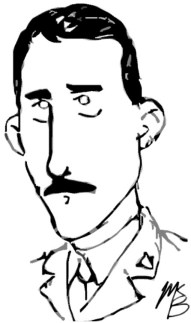
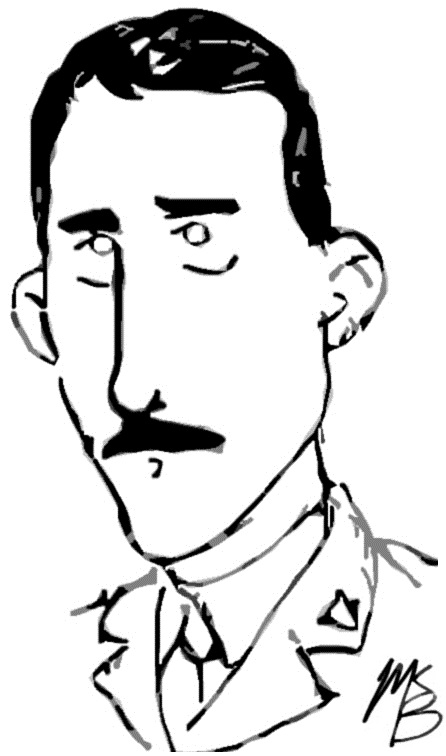
The local cabal against Morris has resulted in the necessity for a change in the command of the 215th Battalion. Morris’ only fault was in trying to jack up, very moderately, a slack Battalion.
(Maj-Gen. Logie to Gen. Hodgins, 9 Dec 1916)
Born in Fort Battleford on 24 May 1885, just as the Northwest Rebellion ended, William Otter Morris had been named after the Canadian commander at the Battle of Cut Knife, Colonel William Dillon Otter. A secretary in civilian life and a prewar member of the 9th Mississauga Horse, he served on the headquarters staff of Major-General W.A. Logie before appointment to senior major in the 170th Battalion in January 1916.
In September 1916, Lieutenant Colonel Harry Cockshutt of the 215th Battalion was made honorary colonel. Dissatisfied with Cockshutt, Logie recommended Morris as his replacement although Cockshutt and locals in Brantford preferred the senior major, H.E. Snider. In comparison to the leadership of Cockshutt and Snder, Logie reported, “From and after the appointment of Lieut. Colonel Morris to the command, the Battalion showed a marked improvement both in discipline and training and this officer is, in my opinion, a competent Commanding Officer who has done nothing to justify removal. Nevertheless the local feeling … would hamper the Battalion in recruiting if Colonel Morris were retained in the command.”
Morris was engaged to the daughter of Ontario superior court Justice Haughton Lennox, former MP for Simcoe South. Lennox complained of the “quasi-political and local conditions” that necessitated the change in command and argued that his future son-in-law “should not be allowed to suffer through inquires which he has not caused and for which he is in no way to blame.” Logie agreed, “It seems a crime to put out a good officer who has done his duty without fear or favour.”
As staff positions were being reserved for officers returned from the front, Morris was given a new battalion in January 1917. He took over the 234th Battalion from Lieutenant-Colonel Wellington Wallace, a veteran of the Northwest Rebellion. The thirty-year old Wallace and the two day old Morris were both present in Battleford when Poundmaker and the Cree surrendered on 26 May 1885.
Morris married Marjorie Lennox just before the 234th proceeded to England in April 1917. He had been allowed to retain his status of lieutenant-colonel as a conducting officer only. He therefore reverted in rank to stay overseas after the battalion was absorbed into the reserves. Following duties as a musketry instructor, he joined the 75th Battalion in the field. In September 1918, he was reported killed in action, before a correction confirmed he was alive and well. For the final month of the war, Morris temporarily assumed command from Lieutenant Colonel C. C. Harbottle, who recovered from wounds.
One afternoon on 30 October:
Whist the Officer Commanding [Morris] and the Adjutant were scanning the daily paper, which had just arrived at about 3:00 P.M., a very young captain, accompanied by another of the same rank, appeared in the doorway and asked if he might be permitted to inspect the Battalion. Being so young, and making such a request, we at once guessed that his military rank was not on a parallel with his exalted social statues. It did not take long for the O.C. to know that it was the Prince of Wales. It took a longer time for his obtuse Adjutant to find out. He still went on reading his papers, and took little notice…
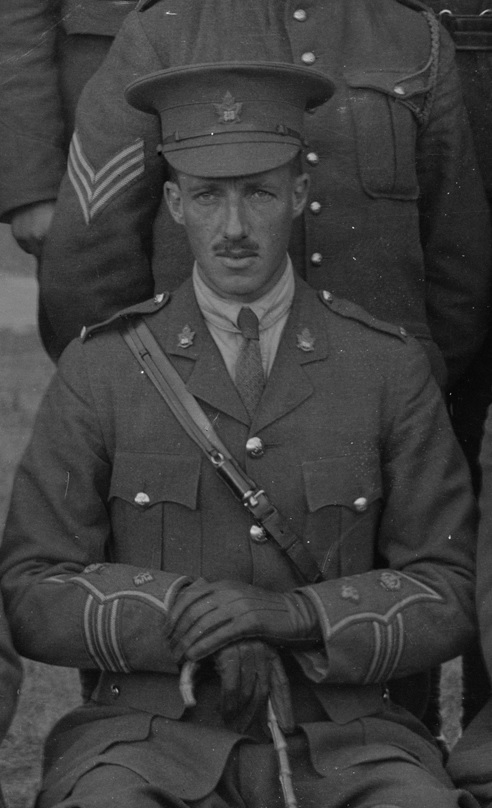
Morris turned over command back to Harbottle shortly after the Armistice.
Morris died on 21 January 1960 at the age of seventy-five.
 World War Graphic History