Lieutenant-Colonel Fred Wigle
Argyll and Sutherland Highlanders of Canada
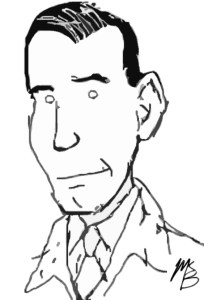
Colonel Wigle had only been with the Battalion two and a half months, but in that short period of time had taken the Argylls through some of the bitterest fighting of the war. He had distinguished himself through his coolness, courage and methodical, hard work. In the ten weeks he spent as C.O. of the Argylls he had been awarded the Order of the British Empire and the Distinguished service Order, a rare honour, indeed, over such a short period of time. Every member of the unit was deeply shocked at the news of the death.
(War diary, 14 Apr 1945)
Born on 11 July 1913 in Hamilton, Ontario, Frederick Ernest Wigle was graduate of McGill University, a football player, coach and a sales executive. He grandfather, Colonel Ernest Wigle had commanded the 18th Battalion during the First World War. Wigle volunteered with the Canadian Armoured Corps in May 1941 and was commissioned in the 6th Duke of Connaught’s Royal Canadian Hussars. He went overseas as captain and staff officer in the 5th Armoured Division in November 1941. Following promotions and staff postings in England, he joined the 4th Armoured Division as chief of staff in August 1944 during the Normandy campaign.
He service in this role would later be recognized with an Officer of the Order of the British Empire:
Since Lt. Col. Wigle joined this fmn in August as GSO 1 the division had not been out with the enemy. During this period his comprehension of the broader picture and anticipation of enemy reactions has been invaluable. He has the faculty of grasping quickly the commander’s intention as it applies to the lower fmns and being able to ensure that it is carried out. In spite of the difficulties inherent in situations where information was never complete, Lt. Col. Wigle did not show the strain or allow it to affect his judgment. His calm and decisive manner and his incisive speech have been a source of confidence to all ranks in this HQ. He had distinguished himself by his continuous attention to detail in planning operations during this period.
Wigle transferred from 4th Division HQ to take command of Argyll and Sutherland Highlanders of Canada at the end of January 1945. Lieutenant-Colonel Dave Stewart, who had served heroically and continuously in action for six months, had been relieved of command due to battle exhaustion.
A month, Wigle commanded a task force of armour and infantry at Hochwald Forest, for which he earned the Distinguished Service Order:
During this entire period Lt. Col. Wigle was constantly forward with his leading coys encouraging his men and coordinating their defense … When the counter-attack commenced, he remained with the coy and directed their fire so effectively that the skill, initiative and daring displayed by this officer was directly responsible for the success of this difficult operation. His courage and complete disregard for personal safety was an inspiration to all ranks under his command.
He was presented with the award on 9 April 1945, only to die five days later. He was among several killed when the battalion tactical headquarters was attacked on 14 April near Friesoythe. According of Major-General Chris Vokes of 4th Division, Wigle had been “Not merely killed, it was reported to me, but sniped in the back.” In revenge, Voke promised, “I’m going to raze that goddamn town.”
 World War Graphic History
C.P. Stacey’s autobiography calls the razing of Friesoythe (Vokes followed through) the only Canadian war crime he was aware of during the Second World War. Foster talks about the incident in Meeting of Generals, also.