Lieutenant-Colonel H.E. Molson
B.C. Regiment (Duke of Connaught’s Own)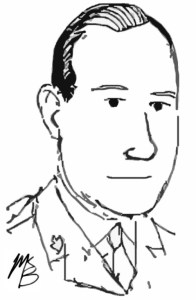
In making up and despatching the party for return to Canada, Major Molson was a constant source of irritation and trouble. I have spoken to this officer and in my opinion he is the type who feels he is above the observance of any laws or regulations. In my opinion this officer can never be responsibly employed in any Military Office under the Crown.
(Lt-Col. A.W. Beaumont, adverse report, 7 Jul 1940)
Born on 31 May 1893 in Montreal and raised in England, Harold Elsdale Molson was a barrister, civil servant, and big game hunter. He took a commission in the British Army after graduating from Cambridge in 1914. He served with the King’s Royal Rifle Corps in France where he was wounded in July 1915. He practiced law for two years in England before moving to Vancouver in 1921. He joined the British Columbia Regiment in 1930 and became commanding officer eight years later.
In November 1939, Molson reverted from lieutenant-colonel to major and joined the PPCLI, which embarked for the United Kingdom with the 1st Division a month later. Major G. Carmichael assumed command of the B.C. Regiment. After falling ill in England in July 1940, Molson was boarded as medically unfit. When he learned he had been included in a list for return to Canada, he disappeared from a holding unit without authorization. The commanding officer noted of Molson, “During his brief stay here he continually asked for permission to go somewhere or other and intimated to one of my Officers that he would go anyway, permission or not.” When he reappeared, Molson was placed under surveillance and sent home marked by an adverse report.
Insulted by his treatment, Molson retorted, “If I was a source of irritation and trouble in making up and despatching the party for return to Canada, it was not in any way my fault.” On arrival back in Canada, he complained, “I cannot, however, help but feel that the reports from CMHQ, which are on my file—extracts from which were read to me—will stand in my way for selection in connection with future army employment for which I have certain qualifications.”
Back in Vancouver, he acted as chairman of the local Red Cross and welfare officer for the department of pensions. He died of a heart attack on 4 February 1946.
 World War Graphic History