Lieutenant-Colonel Dick Ross
Cameron Highlanders of Ottawa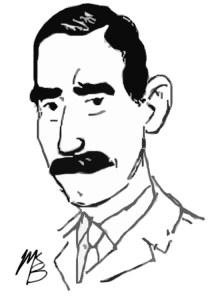
The Camerons were the best damned machine-gun battalion that ever worked on any front. The men were wonderful all the way through. Ottawa can be proud of every one of them.
(Quoted in Ottawa Journal, 12 Dec 1945, 2)
Born on 28 May 1909 in Montreal, Richard Montgomery Ross was a prewar member of the Cameron Highlanders of Ottawa. He rejoined the battalion with the outbreak of the Second World War and rose to major and served as “D” Company commander when the machine gun and mortar unit deployed on D-Day. “There was a tremendous amount of smoke, and everything in view seemed to be afire,” Ross recalled. “Shells were bursting around, but so terrific was our air support that there was very little ‘aimed’ fire.”
“It sounds like a ‘plug’ for the regiment, I know, but it is precisely true that everything about the landing went off exactly as planned,” Ross observed. He claimed his company suffered only one man killed by sniper fire. Promoted to second-in-command during the Normandy campaign, he succeeded Lieutenant-Colonel P.C. Klaehn in October 1944. He commanded until the end of the war and earned the D.S.O.:
The fine qualities of leadership, tactical knowledge and administrative ability shown by Lt-Col Ross have been the chief factor in maintaining the magnificent support to the infantry attacks provided always by the 1st Bn Cameron Highlanders of Ottawa (MG). Under his command, the machine gunners and heavy mortarmen have always given the maximum support to the infantry brigades of this division in their attacks.
Ross led the battalion home to Ottawa in December 1945, declaring of his unit:
They have been a wonderful group of men and have lived up to the highest traditions of the unit. IT has been a privilege to command them … The Camerons of Ottawa were real soldiers. They cared for their machine-guns and mortars to a degree that was almost fussiness. Some of the men would hardly let you touch their weapons.
Despite the end of the war, Ross continued a career in the army. In 1952, he was named commanding officer of the 2nd Battalion, Royal Highlanders (The Black Watch), which served in Korea as part of the 25th Canadian Infantry Brigade. On his return home in 1954, Ross explained that the peninsula “is still a powder keg” and suspected communists remained active in the south. He more critically observed:
The Koreans have become accustomed to a primitive life and they are not making advancement much in taking over the management of their own country. They know little or nothing of communications, sanitation, wireless, or other modern developments and it is going to take a long time to bring them into line with modern advancements.
Ross died on 18 August 1979 and is buried in Ottawa.
 World War Graphic History