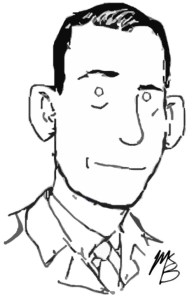
Lieutenant-Colonel D.F. Forbes
North Nova Scotia Highlanders
We are down here to study Anglo-American tactics in the field in the field in the hope of learning their methods and to take this knowledge back to our boys in England. But right now our biggest trouble consists of being bored stiff for lack of something to do.
(Quoted in Montreal Star, 18 Jan 1943, 2)
Born on 24 October 1906 in Tatamagouche, Nova Scotia, Donald Frederick Forbes belonged to the Colchester and Hants Regiment from 1921 to 1937 and then served as adjutant with the Cape Breton Highlanders. He transferred to the North Nova Scotia Highlanders in 1941 and served as second-in-command during the Normandy campaign. For refusal an order he viewed as a waste of his men, Lieutenant-Colonel Charles Petch was fired and Forbes took over on 3 August 1944.
In January 1943, Forbes joined other Canadian officers for attached duty with the British Army in North Africa. At least initially as an observer with the Grenadier Guards, he had been unimpressed with the lack of action and practical experience:
It seems about all we have to worry about so far is how we are going to hitch our way back to town and back to camp. We go swimming every morning, come to town every afternoon and go back to camp at night—we can’t even get into trouble.
A year and a half later, Forbes led the North Novas through the Falaise operations and the capture of Boulogne in September. He earned a Distinguished Service Order. in the battle where he “displayed great courage, leadership and calmness and was an inspiration to his entire battalion.” He received a D.S.O. Bar for his actions the next month for an amphibious assault on a German bridgehead. He was put out of action from an ankle injury in November but resumed command by January 1945 until the end of the war in Europe.
He was succeeded by Major F.A. Sparks in July but would return with the battalion for demobilization at the end of the year. Forbes continued a postwar army career, serving as director of infantry training and a military attaché in West Germany. He returned to Canada in 1956 to become commandant of Camp Petawawa.
Forbes died of a heart attack on 27 August 1957.
 World War Graphic History