Lieutenant-Colonel G.D. Gillie
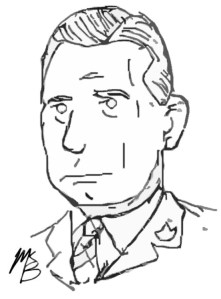 &
&
Major J.H. Shaver
Stormont, Dundas and Glengarry Highlanders
After repulsing a counter-attack, he made a most difficult reconnaissance in order to establish an offensive flank, during which he captured three of the enemy. He then entered a and held an enemy trench with a small party for ten hours, defeating two enemy bombing parties. His utter disregard for personal safety was a splendid example to his men.
(Military Cross citation, 26 July 1917)
Born on 17 May 1890 in Cornwall, Ontario, George Douglas Gillie worked for the Department of National Revenue as senior customs official. In March 1916, he enlisted with the 154th Battalion as a lieutenant and joined the 21st Battalion by the end of the year. In April 1917, he transferred to the Royal Flying Corps as an observer and earned the Military Cross in the skies above Vimy Ridge. He relinquished his commission as a flying officer in 1919 and returned home for demobilization.
With the reorganization of the Canadian militia in 1920, Gillie joined the Stormont, Dundas and Glengarry Highlanders, which perpetuated the 154th Battalion. By the outbreak of war in September 1930, he had risen to command of the regiment. The unit brief activated for guard duty of the St. Lawrence canal but reverted to reserve training status in October. By March 1940, Gillie was appointed commander of No. 3 District Depot in Ottawa and relinquished command to Major James Hermon Shaver.
Born on 28 August 1901 in Osnabrock, Ontario, Shaver was a civil servant and militia officer with the SDG Highlanders since 1927. He tenure would be brief. He died of a coronary occlusion on 23 May 1940 in Cornwall, where he was buried with full military honours. Gillie acted as honorary pallbearer as did former SDG Highlanders commanding officer Lieutenant-Colonel W.J. Franklin, who took again command of the unit during mobilization the next month.
After several years overseeing recruitment efforts at the district depot, Gillie resigned due to ill health in 1944. A pension report summarized his contribution in militia and governmental service:
… throughout a long army career has shown himself a fine soldier and a capable administrator. He possesses great drive and an outstanding gift of friendship. Has long been noted for his strong personal interest in the welfare of all those serving under him. In civil life he has served Canada for many years in a very responsible post.
Gillie returned to the civil service as customs collector in Cornwall, where he died of coronary thrombosis on 16 November 1947.
 World War Graphic History