Lieutenant-Colonel F.M. Matheson
Regina Rifle Regiment
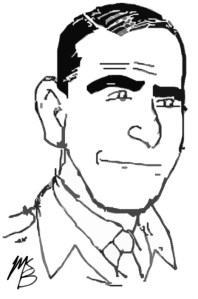
In particular on the night of 8/9 June 1944, when the Battalion Headquarters was attacked by PZ KW Mk V tanks and infantry, the colonel himself led the defence resulting in knocking out five tanks.
(D.S.O. citation, 31 Aug 1944)
Born on 5 January 1904 in Prince Albert, Saskatchewan, Foster Martin Matheson was an accountant and joined the Prince Albert Volunteers in 1923, raising to the rank of major. He transferred to the Regina Rifle Regiment on mobilization for active service in 1940. In England, he succeeded Lieutenant-Colonel Harry Sharp in March 1943. “Reports from Canada,” he wrote home, “sometimes lead us to believe that you are gaining the impression that boys over here are getting very ‘browned off’ due to the long wait. The surprising thing is that the men are standing up remarkably well.”
The Regina Rifles finally went into action on 6 June 1944. Matheson led the regiment ashore on Juno Beach and earned the Distinguished Service Order for “cool-headed and inspiring leadership” during a German counter-attack. He remained in command during the heavy summer and fall fighting but his health began to breakdown by September. Following a rest, the war diary observed, he “looks much refreshed and ready for the next round.” Just a month later Matheson announced his replacement by Lieutenant-Colonel A.S. Gregory, former second-in-command of the Regina Rifles who then briefly served as commanding officer of the Cameron Highlanders of Canada.
Matheson returned to England for training duties with a promotion to colonel. Of the postwar situation, he remarked, “much depends on how the nations handle the big problems, which involve everyone. Our only hope is the United Nations; and if individuals don’t try to impose their particular ideas on it, I think we should have peace.” By 1946, he had retired from the army and resumed civilian life. In addition to work as an investment banker and alderman in Saskatoon, he was active in many civic, business, and veteran organizations, such as the Chamber of Commerce, Saskatchewan Trade Board, Corps of Commissionaires, and the Canadian Legion.
He died in Regina on 4 February 1967.
 World War Graphic History