Lieutenant-Colonel Vern Stott
South Saskatchewan Regiment
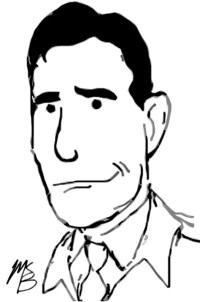
The excellent fighting qualities of the South Saskatchewan Regiment under Lieutenant Colonel Stott’s command have repeatedly demonstrated the influence of this officer’s high sense of duty and superb leadership in battle.
(D.S.O. citation, 13 Mar 1945)
Born on 27 May 1912 in Vancouver, Vernon Stott worked as sales representative for the Barber-Ellis paper company in British Columbia and Alberta. He volunteered with the Calgary Highlanders in 1940 and within three years rose to second-in-command. Although Brigadier W.J. Megill expressed little confidence in Lieutenant-Colonel Don MacLauchlan, he was impressed with Stott’s potential as a leader. During the battalion’s first action in Normandy, Stott relieved a “highly nervous” MacLauchlan until he was wounded himself by mortar shelling on 25 July.
By September 1944, he had recovered but was soon assigned to take over the South Saskatchewan Regiment from Lieutenant-Colonel B.R. Ritchie, who had been in command for just a week before being assigned to the Black Watch. “Once again the S.Sask.R. had been given an outstanding man as its C.O.,” Major G.B. Buchanan recorded in the regimental history. “Colonel Stott was destined to lead the regiment throughout the of the war, and bring it home to its triumphal parade in Weyburn.”
He led the battalion through the liberation of the Low Countries and the invasion of Germany. He earned the D.S.O. for organizing the 26 February 1945 attack near Calcar:
Through his leadership, and exercise of complete control of his battalion group, the strongly held pimple feature was completely over-run and the South Saskatchewan Regiment was consolidated on the objective by daylight. The first enemy counter attack resulted in complete destruction of an enemy company, the remnants of which, thirty-two in number became prisoners of war.
Following demobilization, Stott returned to the Barber-Ellis company as manager of the Vancouver office and then transferred to the Toronto head office in 1955.
He died on 19 January 1996 in Toronto.
 World War Graphic History