Lieutenant-Colonel Tommy Jones
Essex Scottish Regiment
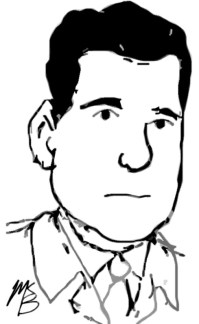
It is the biggest event of the day when the mail comes and there are one or two letters in the bunch for you, I cannot stress too strongly the part letters play in keeping up a fighting man’s morale. Sometimes it is difficult for the boys in the trenches to write daily, but that is no reason for us back home to be derelict in our duty to them. They cannot receive too many letters.
(Quoted in Windsor Star, 15 Nov 1944, 10)
Born on 14 February 1913 in Fort William, Ontario, Thomas Sidney Jones enlisted as a lieutenant with the Lake Superior Regiment and served as battalion adjutant. Rising through the ranks, he transferred to the Essex Scottish Regiment in January 1944, succeeding Major J.D. Mingay as second-in-command. Two weeks after D-Day, Jones joined an advance party to Normandy before the rest of the regiment followed on 5 July 1944.
Following perceived nerves in his first action on 22 July, Lieutenant-Colonel B.J.S. Macdonald was removed from command and replaced by Jones the next day. Despite Macdonald’s protests he was reassigned and Jones led the Essex into the advance on Caen. “We were under intense shelling from their mortars and we found that the strongest part of their defence was their fire and not their numbers,” he said of the enemy. “They had all the advantages there.”
Through the morning fog on 8 August, Jones mistook a group of German stragglers for his own men. He suffered a serious gunshot wound resulting in a fractured arm. Major Peter Bennett took over the Essex Scottish for over a month until he too was wounded. Jones was evacuated from the field, hospitalized in England, and sent home for convalesce leave. With is arm still in a sling, he took the time to visit the home community of the unit he had briefly commanded in action, stating:
Soldiers like myself who come to the regiment from other parts of Canada are told by the men about this support from the home folks as soon as they join the unit and I feel that Windsor is my second home.
He met with the families of the soldiers he had served with overseas and toured the city. When asked by a reporter if the Allies were winning, Jones replied, “Sure we are. When I left, everyone was hoping that the war would be over by Christmas, but they are no sure now and they are prepared to fight through the winter to beat the Germans.”
Jones returned to northern Ontario but maintained his connection to the Essex Regiment through postwar ceremonies and reunions. Active in promoting industry and commerce in the town of Dryden, he served as mayor from 1978 to 1990. He died in Dryden on 22 September 1993.
 World War Graphic History