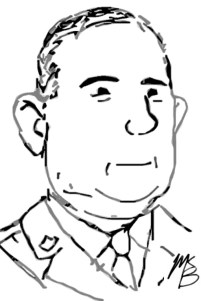
Lieutenant-Colonel A.S. Pearson
Essex Scottish Regiment
This time we are ready. In 1914, war came upon us like a bombshell. This time we have known of its imminence. We are more or less prepared for the orders that came today. We must accept things as they are and do our duty.
(Pearson quoted in Windsor Star, 3 Sep 1939, 12)
Born on 11 November 1891 in Toronto, Arthur Stephen Pearson was a First World War veteran, lawyer, businessman, and commanding officer of the Essex Scottish since 1936. Twenty years earlier he enlisted as a captain in the 234th Battalion, reverted to lieutenant to join the 75th Battalion in France and was twice wounded in action. On the outbreak of war in September 1939, Pearson immediately started a recruitment drive to bring the regiment to full strength.
The Red Cross is the most vital organization in the whole fighting forces. Nothing I can say will emphasize this. You all know it as well as I do. It is one of the really essential organizations in the present war if it is to be prosecuted, and prosecuted it must be.
(Pearson quoted in Windsor Star, 23 Nov 1939, 16)
The Essex Scottish embarked for the United Kingdom in summer 1940 and Pearson remained in command for the next year and a half. Deemed too old for active service, he was posted to a holding unit in January 1942. He was succeeded by Major Fred H. Jasperson, who would be taken prisoner at Dieppe eight months later.
Promoted to colonel, Pearson took command of a reinforcement unit in England and was made Officer of the British Empire. Back in Canada, the country went to the ballot box in April 1942 to release the King government from its pledge to not enforce overseas conscription. As spokeswoman for the wives of servicemen overseas, Pearson’s wife declared:
We think of those we love across the water. They have sacrificed everything. We have sacrificed them, at least for a time. So we must back them up in every way possible, and a “yes” vote which assures an all-out support on the part of the government is one clear way of giving them our support.
He acted as chairman for No. 2 Officer Survey and Classification Board, which recommended the retention or return of Canadian officers stationed in England. He returned to Canada in 1945 and resumed a business career. He died in Toronto on 6 May 1972.
 World War Graphic History