Lieutenant-Colonel Art Fraser
Royal Regiment of Canada
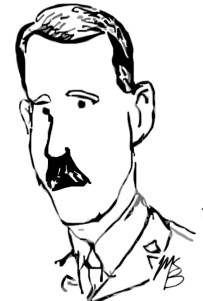
The raid was costly in that many lives were lost, but the lessons learned at Dieppe were essential for the future undertakings of the Allied forces. The invasion of North Africa might have been a dismal failure along with future invasions without the knowledge gleaned at Dieppe.
(Ottawa Citizen, 26 Feb 1943, 15)
Born in Victoria, British Columbia in April 1907, Arthur Hayward Fraser enlisted with the Canadian Scottish in 1922, received a commission in 1928, and transferred to the Permanent Force with the PPCLI in 1931. During the early phase of the Second World War, he served on the general staff of the 2nd Canadian Division and became brigade major of the 4th Infantry Brigade prior to the Dieppe Raid of 19 August 1942.
For “the greatest coolness and steadiness under heavy fire” at Dieppe, Fraser earned the Distinguished Service Order and a promotion to lieutenant-colonel. He assumed command of the Royal Regiment of Canada, which had been decimated in the failed raid, replacing Lieutenant-Colonel D.E. Catto who had been taken prisoner. The D.S.O. citation read in part:
On this L.C.T. although under intense fire from the shore and bombardment from the air he maintained effective contact with his battalion and was mainly responsible for the successful re-embarkation from Green Beach. His cool courage had a great steadying effect upon those serving under him and his initiative and determination contributed in a very large degree to the success of the operations.
As the remnants of the battalion reorganized, Fraser remained in command until January 1943 shortly before he was recalled to Canada. Command passed to Lieutenant-Colonel F.L. Nicholls, an original Royal Regiment officer who had been posted to the 6th Brigade as brigade major. Welcomed home as a hero, Fraser reported to the press that the costly lessons and high casualties from Dieppe Raid provided the hard, particular experience of action that the Allied forces needed.
He next took up training duties at Wainwright, Alberta. “Stress is laid on attack especially,” he stated of the drills, “but also on other operations–advance courter-battle, dusk and night attacks, consolidation and exploitation, defence and withdrawal.”
Fraser retired from the army as quartermaster general for the BC Area Headquarters in 1958. Like many former senior officers, he turned his attention to civil defence in the 1960s.
He died in Abbotsford, British Columbia on 3 September 1976.
 World War Graphic History