Lieutenant-Colonel Ronald Morton
10th Armoured (Fort Garry Horse) Regiment
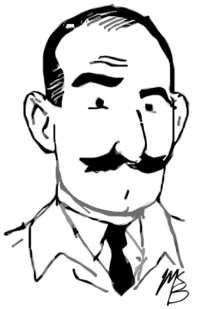
He commanded our respect, our obedience and our love. On leaving he reported Officers are the soul of a Regt, the Sgts are its backbone. To write a biography of Col., MORTON is impossible here, but surely it may be and should be done elsewhere. “If I have built a good foundation, the Regt will be just / as well off without me.”
(FGH war diary, 28 Aug 1944)
Born in Toronto on 12 December 1900, Ronald Edward Alfred Morton graduated from RMC in 1923 and joined the Permanent Force. In October 1941, he transferred from second-in-command of the Lord Strathcona’s Horse to replace Lieutenant-Colonel S.J. Cox of the Fort Garry Horse. Despite eighteen years in Winnipeg with the LdSH, he was still viewed as an outsider but soon accepted as a “synthetic westerner.” He would serve as commanding officer for the unusually long period of almost three years, and led the FGH Tanks in the invasion of Normandy on 6 June 1944.
On D-Day, the regiment supported the 8th Infantry Brigade landings at Juno Beach. From his command tank, Morton knocked out an enemy battalion command post, and in the coming days performed heroically as a leader. Only after his tank took three hits and was set ablaze did he finally evacuate. He earned the D.S.O. for “D day and every action since”:
The splendid consistent display of courage, determination, cheerfulness and cooperation has been a most outstanding example of the best soldierly qualities and is worthy of the highest recognition.
At the end of August, the FGH was surprised and disappointed to learn that Morton was to be reassigned. He relinquished command of the regiment to Major E.M. Wilson and became general staff officer of the Canadian Armoured Corps with First Canadian Army headquarters. As his son and historian Desmond Morton would later write, “In the summer of 1946, my dad finally came home from the war. He had taken the Garrys as far as the Falaise Gap, earned a Distinguished Service Order and a French Legion of Honour, but at forty-four he was considered too old to command a frontline regiment.”
Following a postwar appointment to Prairie Command, in 1952, Morton was posted to Japan during the Korean War to serve as head of the Canadian Military Mission, Far East. He retired from the army at the rank of brigadier in 1955 and died on 8 March 1976 in Toronto.
 World War Graphic History