Lieutenant-Colonel Gordon Corbould
Westminster Regiment
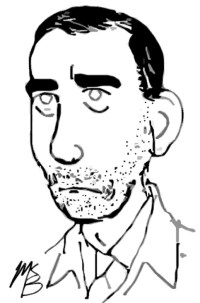
Lt.-Col. Corbould was chief umpire for the army-air force scheme … “Someone has to run a show like this,” Lt.-Col. Corbould remarked dourly. “Otherwise it becomes just another game of cowboys and Indians, with people running around shouting ‘Bang! You’re dead!.’”
(Edmonton Journal, 15 Feb 1958, 23)
Born on 2 June 1909 in New Westminster, British Columbia, Gordon Charleson Corbould became the fourth generation of his family to hold the rank of colonel in the Canadian Army. A member of the militia since 1927, he went overseas as a lieutenant with the Westminster Regiment in 1941. He later transferred to the Irish Regiment as second-in-command under fellow British Columbian Lieutenant-Colonel R.C. Clark.
In Italy in February 1944, he returned to the Westminster Regiment to replace Lieutenant-Colonel R.L. Tindall. He remained in command for the next two years throughout the Italian campaign and after the move to Northwest Europe until demobilization. In spring 1944 he had commanded “Corbould Force” during the Battle of Monte Cassino and earned the Distinguished Service Order at the Melfa River on 24 May 1944:
The courageous leadership, energy and determination of this officer set an example of the highest order to all those under his command. He was ever encouraging and cheerful, and at all times the unit was behind him to the last man.
Major Jack Mahony, who earned the Victoria Cross in the Melfa River action, said of the Westminsters, “I do not want to appear boastful, but there is no finer regiment in Canada,” and praised Corbould as “one of the finest Commanding Officers in the Canadian Army.” “
Although Corbould returned to civilian life and the reserve army after the war, he returned to duty with the formation of the Special Force during the Korean War. He became first commanding officer for the 3rd Battalion, PPCLI and later headed the 25th Reinforcement Group in Japan. Of his training duties, Corbould stated:
To train the battalion to a fighting standard within the target date set by the brigade commander called for an all-out effort by every member of the unit and I had to impress on them a great sense of urgency to get the job done …my own experience as a battalion commander for fourteen and one-half months in action stood me in good stead. I knew exactly wat I wanted and how to get it …
In January 1952, he replaced Lieutenant-Colonel Robert Keane of the 2nd Battalion, Royal Canadian Regiment in Korea. After five months in the line, the battalion was rotated out of the Korean theatre. It returned to Canada and Corbould remained in command when the battalion next moved to West Germany. In 1955, his wife Greta was elected mayor of the Canadian community at Soest, Canadian brigade headquarters in Germany.
Corbould retired from the army in 1960 and died on 14 January 1983 in Bella Coola, British Columbia.
 World War Graphic History