Lieutenant-Colonel Johnny Andrews
14th (Calgary) Tank Regiment
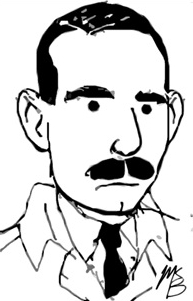
There is just one chance in a thousand that he is alive, but that is the way he would have liked to go if he had to go … I can well imagine John leaving his tank and leading a charge on the enemy pillboxes on foot. He was just that type.
(Andrews’ father to Toronto Star, 22 Aug 1942)
Born on 18 February 1909 in Elgin, Ontario, John Gilby Andrews had joined the Permanent Force in 1930, attended RMC, and was former instructor at the Armoured Fighting Vehicles School. On the formation of 1st Army Tank Brigade in March 1941, he was appointed brigade major and by December had succeeded Lieutenant-Colonel G.R. Bradbrooke in command of the Calgary Tank Regiment overseas.
Battalion chaplain Waldo Smith later wrote of the new commanding officer:
We were well pleased. He was a good deal younger than most Canadian colonels we knew but he was a professional soldier and keen. He had been infantry but if a man was out to learn all there was to know about tanks his infantry background was all to the good. In the course of settling into his new command he had personal talks with the older officers, including the padre, to see how each thought about the regiment. He was quick to see new ideas, he had the right touch with officers and men and as a regiment we looked forward in good confidence to whatever part we should have to take.
(Smith, What Time the Tempest, 44)
On 19 August 1942, the regiment’s tanks were assigned to support the infantry landings on beaches of Dieppe in Operation Jubilee. The commander had been unsatisfied with the plan recognizing that the vehicles which made it to land would be unlikely to return. With his own landing craft under shell fire as it came ashore, Andrews’ tank sank under the water. “We got 33 hits on our landing craft in five minutes,” he stated. “They hit us with everything they had.” Andrews radioed, “I’m getting out of my tank—Toodle-oo,” and then was never heard from again.
Initially reported missing in action during the confusion of the evacuation, he was later confirmed killed, either drowned or struck by enemy sniper fire after bailing out. One of the men to escape the command tank later stated, “I saw him reach shore and saw him wave his hand. He must have been hit after that. I don’t know, for I was hit a second time.” Major John Begg took command of the battalion from offshore, but his landing craft was forced back under heavy fire.
On learning of his son’s fate, sixty-year-old Lieutenant-Colonel W.A. Andrews, a First World War veteran, told the press, “I’ve offered my services for this war and I’m still hoping they’ll accept me … I’d like to have a crack at them.”
 World War Graphic History