Lieutenant-Colonel Dick Danby
Carleton and York Regiment
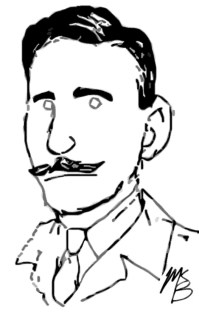
Throughout the entire operation although stalked by snipers and under continuous mortar fire Major (A/Lieutenant Colonel) Danby led his unit with the utmost gallantry and dash. His personal example steadied and encouraged his men and contributed greatly to the success of their attack.
(D.S.O. citation, 16 Nov 1944)
Born in Vancouver on 20 December 1915, Ernest Deighton “Dick” Danby was a young lieutenant with the Seaforth Highlanders when he was selected to be aide-de-camp by General R.G. Pearkes of the 1st Canadian Division in 1940. He attended the War Staff College at Camberley, England and served as a general staff officer with the division during the Sicily campaign. In August 1943, when Lieutenant-Colonel J.E.C. Pangman took charge of the Carleton and York Regiment, Danby became the new second-in-command.
After Pangman was relieved in early January 1944, Danby temporarily filled in until Lieutenant-Colonel F.L. Nicholls of the Royal Regiment of Canada arrived to take over the CYR. Nicholls’ time in command, however, would be brief and Danby resumed command in April 1944. For his leadership at the Hitler Line the next month, he would receive the Distinguished Service Order:
Danby positioned himself well forward with his leading troops and by his personal efforts, determination and complete disregard for his own safety succeeded in moving his men forward close behind the barrage.
Danby suffered shrapnel wounds in September 1944, requiring evaluation. Although he briefly rejoined the CYR in November, he was soon posted to be general staff officer with I Canadian Corps Headquarters. Command passed to Major J.P. Ensor who would be the final active wartime battalion commander.
During the Korean War, Danby served as chief staff officer with the Commonwealth Division and acted as spokesman for Canada within division headquarters. In the 1960s, he commanded the British Columbia Area and later acted as liaison for the Canadian Army in Washington.
He retired from the army in 1971 and died in Vancouver on 1 April 1997.
 World War Graphic History