Lieutenant-Colonel Fred Nicholls
Royal Regiment of Canada
Carleton and York Regiment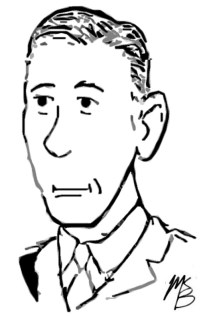
Lt Col Nicholls is a figure of mystery. No record of what unit he came from could be found, he effectively commanded the CYR for only three months, was then away sick for a period … He is described by survivors as a nice fellow, but beyond that no one interviewed could recall anything about him.
(Tooley, Invicta dissertation, 324)
Born on 8 June 1906 in Whitstable, England, Frederick Leslie Nicholls was a Bell Telephone Company engineer and member of the Royal Regiment of Canada since 1926. He had received a commission in 1931. He was stationed with the regiment in Iceland, attended the War Staff College at Camberley, and became the regiment’s second-in-command after the Dieppe Raid. He then served as brigade major of the 6th Infantry Brigade from November 1942 until his appointment to command the Royal Regiment on 22 January 1943, succeeding Lieutenant-Colonel A.H. Fraser.
The junior staff college report described Nicholls as: “A solid, reliable officer who has produced equally sound [general] or [assistant quartermaster] work. His is not a quick brain, but it is clear and practical. At first he found difficulty in expressing himself verbally, but he has overcome this weakness. He has ample commonsense and is at times surprisingly imaginative. A methodical but rather slow worker. A strong determined character, with a quiet manner and latent sense of humour. He has the attributes of a commander and a staff officer.”
After eight months, he relinquished command of the Royal Regiment to Lieutenant-Colonel F.S. Wilder on appointment to be general staff officer of the Canadian Reinforcement Units. With his departure in August 1943, the Royal Regiment officers presented him with “a very handsome silver Cigar box engraved with the rgt’l crest.” Even in his new role, Nicholls would frequently visit his old unit over the coming months.
As part of a senior officer replacement pool dispatched to the Mediterranean theatre, in January 1944, Nicholls received a field appointment in Italy to take over the Carleton and York Regiment, replacing Lieutenant-Colonel J.E.C. Pangman. His brief tenure evidently made little impression on the unit, and he was relieved in under four months. Major Dick Danby took command of the regiment in April 1944.
Troubled by a hearing problem in his right ear, Nicholls had expressed “repeatedly his fear of, on some occasion, misinterpreting such signal and feels very definitely that in view of the very probable repetition of impaired hearing to be expected in the future, that he will be unable to carry out his duties efficiently.” A specialist admired the colonel’s “altruistic attitude in bring to light his medical disability,” but assured Nicholls of his fitness to command and “that he had need have no fears on medical grounds.” Superiors where less convinced by Nicholls’ fitness as a leader.
“This offr endures his present appointment with complacency,” Major-General Chris Vokes remarked. “He appears to lack the fire which will inspire his bn in battle. As his experience in comd of C+Y has been in a static role only, this is merely a personal opinion. He does not impress me.” Nicholls’ chronic but minor ear problem provided sufficient grounds for his relief on a medical rather than on a military basis.
Nicholls returned to Canada in July to become general staff officer for the directorate of military training with National Defence headquarters. “The principle is to get officers back home for the training branch who have had battle experience,” he stated, “who therefore know what is required in Canadian training and who can direct training along those lines.” In February 1945, he was appointed commandant of Camp Petawawa. He then performed special duty to Washington, D.C. before retirement from the army in October 1945.
Nicholls died on 14 June 1993.
 World War Graphic History