Lieutenant-Colonel A.A. Ernst
West Nova Scotia Regiment
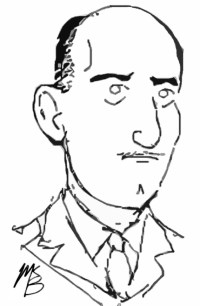
He has a pleasant rather earnest manner, common sense and a firm character. His appreciation of ground is good and he can give clear verbal orders. His tactical knowledge of his own rm is good and that of other arms is up to the average of his rank.
He expresses himself clearly and sensibly in discussions. Although 46 years old he is fit and wiry and is fit to command.
(Commandant, Senior Officers’ School, 1941)
Born in Lunenburg, Nova Scotia on 12 July 1895, Arnold Albert Ernst was an accountant and a First World War non-commissioned veteran. He served for a year with the RCR as a private until he was severely wounded at Vimy Ridge. A bullet had passed through both lungs and he coughed blood for several days. He ended the war as a sergeant and rejoined the militia ten years later as a commissioned officer. On mobilization in September 1939, he transferred from the Halifax Rifles to go overseas as Major in the West Nova Scotia Regiment.
He took temporary command of the regiment from December 1940 to March 1941 while Lieutenant-Colonel Milton Gregg was on sick leave. In May 1941, Gregg left to become commandant of the Canadian Officer Training Unit and Ernst earned an official promotion to lieutenant-colonel six months later. Although he had performed well on a senior officers’ course, he failed to impress General Bernard Montgomery on an inspection tour in February 1942.
Montgomery thought Ernst slow to follow instructions and required much guidance. He found that the whole battalion “gave me an uncomfortable feeling from the start.” A month later Ernst was gone, replaced by Major J.A. Hebb, one of the only West Novas who impressed Monty.
Ernst returned to Canada and by May 1942 had been seconded to the Royal Canadian Air Force as part of the Eastern Air Command. He and four others were presumed killed on 7 November 1942 when their plane disappeared off the coast of Newfoundland.
 World War Graphic History