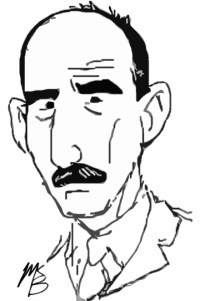
Lieutenant-Colonel Milton Gregg
West Nova Scotia Regiment
He personally killed or wounded 11 of the enemy and took 25 prisoners, in addition to 12 machine guns captured in this trench. Remaining with his company in spite of wounds, he again on the 30th September led his men in attack until severely wounded. The outstanding valour of this officer saved many casualties and enabled the advance to continue.
(V.C. citation, 6 Jan 1919)
With a Victoria Cross and two Military Crosses for heroism in the First World War, Milton Fowler Gregg was one of Canada’s most decorated officers. Born in Kings County, New Brunswick on 10 April 1892, he had enlisted as a sergeant in November 1914 and rose to a lieutenant with the Royal Canadian Regiment. Three-times wounded, three-times decorated for gallantry, Gregg “annihilated” a German machine gun crew at Lens in summer 1917 and repulsed an enemy counter-attack at Arras in summer 1918, before his actions at Cambrai in late September 1918, which earned the VC, the highest award for bravery in the British Empire.
In addition to work with veterans and militia involvement, Gregg became Sergeant-at-Arms of the House of Commons in 1934. He took a leave of absence in late 1939 to rejoin the RCR as second-in-command overseas. Liberal Senator William Duff of Nova Scotia declared:
If you walk down the corridors in this building you will see a vacant room. The gentleman who used to occupy that room had a gallant record in the last war. He id not have to go to the present war; he would have been as justified in staying home as any of us are. But almost as soon as war was declared he enlisted and left his good position here … Honourable members will know that I refer to Colonel Gregg, V.C., Sergeant-at-Arms of the other House, another good Conservative.
In February 1940, he succeeded Lieutenant-Colonel Gerald W. Bullock of the West Nova Scotia Regiment, who had been RCR battalion chaplain during the first war. Hospitalized and on convalescent leave since December, Gregg returned in April 1941. One month later, Gregg became commandant of the Officer Candidate Training Unit in England and later served on officer selection boards in Canada. By April 1942, he had taken over the Officer Training Centre at Brockville, Ontario. He defined officer material in terms of common sense, self-discipline, imagination, and strong character:
Character is unquestionably the main factor in the young military leader, because, without it, common sense, a sense of responsibility, understanding of men, delight in a deed well done and possession of military knowledge are of no use.
With a promotion to brigadier in 1944, he took command of the CANLOAN camp in Sussex, New Brunswick. The CANLOAN program seconded several hundred junior officers to shorthanded British Army regiments. After the war, the CANLOAN Army Officers’ Association made Gregg its colonel-in-chief and first honorary president.
Gregg retired from the army by the end of 1944 to become president of the University of New Brunswick. Having been Sergeant-at-Arms from 1934 to 1939, Gregg returned to the House of Commons this time as a Liberal MP in a 1947 by-election. With nearly a decade in Parliament, he was minister of Veterans Affairs (1948-1950) and Minister of Labour (1950-1957). Follow defeat in the 1957 federal election, Gregg became a diplomat for the United Nations and Canada.
He died in Fredericton on 13 March 1978.
 World War Graphic History