Lieutenant-Colonel Bill Cromb
Lincoln and Welland Regiment
Loyal Edmonton Regiment
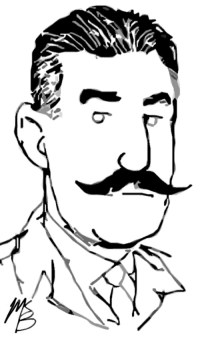
My biggest day in the army came on Aug. 17, the day we closed the Falaise gap. I had just taken command of the Lincoln and Welland Regiment five days previously and we were ordered to take the town of Trun. We got into it without any trouble and captured more than 2,000 prisoners including a German major-general and his complete staff. Only one of our men was hurt … I wish the entire war had been that easy.
(Cromb in Edmonton Bulletin, 6 Oct 1945, 3)
Born in Glasgow, Scotland on 5 November 1903, William Taylor Cromb was an Edmonton vice-principal, president of the public school teachers association, and a popular tenor. A junior militia officer since 1937, he mobilized with the Edmonton Regiment in September 1939. He led a platoon in the Spitzbergen Raid in 1941 and commanded a company during the invasion of Sicily in July 1943.
After the Battle of Ortona in December, Cromb was recalled to the United Kingdom to lend his battle experience to the new Canadian units preparing for the invasion of France. When he became second-in-command of the Argyll and Sutherland Highlanders, he admitted, “I bought a kilt, but never had nerve enough to wear it.”
During the Normandy campaign, on 11 August 1944, Cromb replaced Lieutenant-Colonel J.G. McQueen, who had failed in command of the Lincoln and Welland Regiment. Sergeant Charles Kipp welcomed the change, describing Cromb as “a wild-looking man with short grey hair that stood straight up … From that time on, things changed. Our attacks succeeded, our morale picked up and we soon lost the reputation of being a ‘lost regiment.'”
His subsequent citation for the D.S.O. read in part, “has never considered his personal safety in the carrying out of his many difficult tasks and has led his regiment with great distinction at all times.” After five months leading the Lincs, Cromb received rest leave home in January 1945. The next month, Lieutenant-Colonel Rowan Coleman, who had commanded the Loyal Edmonton Regiment in Italy, took over the Lincoln and Welland Regiment until the end of the war.
When Cromb returned to Europe, he took over the Loyal Edmonton Regiment in place of Lieutenant-Colonel Jim Stone who had returned to Canada after VE-Day. As a result, Cromb had the privilege to lead his old battalion home in October 1945 for demobilization. Commenting on the “might fine welcome” by the citizens of Edmonton, he stated, “I don’t think I’ve ever heard so much noise, not even in battle.”
He stepped down as head of the regiment in the reserve army in 1950. He worked for the Department of Veterans’ Affairs and chaired the War Veteran Allowance Board until 1970.
Cromb died in Nepean, Ontario on 12 January 1990.
 World War Graphic History