Lieutenant-Colonel Ian Tait
Seaforth Highlanders of Canada
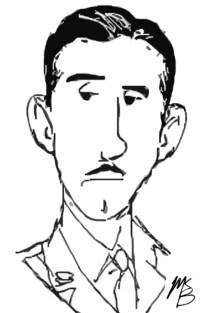
His predecessor, Lieutenant-Colonel J.M.S. Tait, who reportedly liked to adorn himself with Patton-like pistol holsters, had been neither liked nor respected by the soldiers of the unit, the nickname “Hollywood” attesting to their cynicism regarding his abilities and sincerity.
(Delaney, The Soldier’s General, 43)
Born in Vancouver on 1 December 1903, John “Ian” Moore Spottiswood Tait was the son of Lieutenant-Colonel J.S. Tait who commanded the 29th Battalion in late 1916. As a child he attended school in England while his father was on the Western Front. He returned to Vancouver in the early 1920s and joined militia. He went overseas with the Seaforth Highlanders in December 1939, and took command two years later.
On the home front, his wife was president of Seaforth Axillaries and actively promoted welfare work for soldiers’ families. Tait succeeded Lieutenant-Colonel C.C. Ferrie in January 1942. Although a star rugby player in England and an active member of the Vancouver Rowing Club, the thirty-nine-year-old was no longer so athletic and healthy. Diagnosed with a serious heart problem at the end of July 1942, Tait relinquished temporary command to Major J.D. Forin before Bert Hoffmeister would officially take over.
According to the recollections of at least one sergeant, the Seaforths had not viewed Tait very favourably and regarded him as something of a showman. In his regimental history, Reginald Roy offered a more sympathetic portrayal:
Not all casualties came from broken bones or injuries on the range. This was brought home to the Seaforth when Lt-Col. Tait left the battalion on the last day of July. Tait had not been strong physically and frequently over-taxed himself to keep with the men on long route marches. On 21 July he had confided to his second-in-command that he had been reboarded medically as “B” Category, and about a week later heart trouble had forced him to leave for the Shoreham Hospital.
(Roy, The Seaforth Highlanders, 128)
Tait returned home but he remained unwell with heart disease that would prove fatal within a decade. He died of a heart attack on 3 July 1951 at the age of 48. Two weeks later his seventy-six-year-old First World War veteran father died.
 World War Graphic History