Lieutenant-Colonel T.S. Leslie
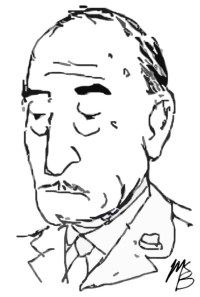
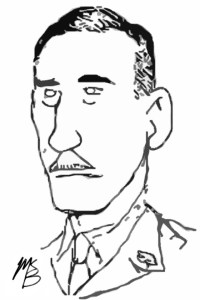
&
Lieutenant-Colonel J.B. Stevenson
Seaforth Highlanders of Canada
Soldiering is not a life-long occupation for any man, and when the time comes for the Seaforths to go back to civil life, they are going to be fitter and better men for their time in the army, if anything we can do will make them so.
(Stevenson in Vancouver Sun, 10 Nov 1939, 13)
Born in Glasgow, Scotland on 16 November 1882, Thomas Soga Leslie had been commissioned with the 231st Battalion and joined the 72nd (Seaforth Highlanders) Battalion as a reinforcement officer in France in May 1917. He suffered a gunshot wound to the arm in September 1918. Twenty years later he became commanding officer of the Seaforth Highlanders of Canada. Too old for overseas service, he relinquished command on 1 September 1939 to another fellow First World War veteran, John Bryden Stevenson
Born in Ayrshire, Scotland on 6 June 1886, Stevenson enlisted with the 72nd Battalion as a private in September 1915. He gained a commissioned in July 1917 and suffered a gunshot wound to the chest at Passchendaele a few months later.
While Leslie took over the regimental depot, Stevenson led the Seaforths overseas with the 1st Division in December 1939. According to historian Doug Delaney in his biography of future Seaforths CO and division general Bert Hoffmeister, “the fifty-three-year-old Stevenson had neither the depth of knowledge nor sufficient appreciation for modern war to give proper guidance to his subordinates.” While stationed in England, he even held his officers back from attending training courses lest they be poached by another CO.
Stevenson returned to Canada in January 1941 on appointment to head the 10th Infantry Brigade. “I’m sorry to leave my boys over there,” he told the press on arrival home. “The past twelve months have been the happiest years for me.” Command of the Seaforths in England passed to another First World War veteran, Major C.C. Ferrie.
On the home front, Leslie oversaw recruiting efforts and in at least one instance drew criticism for censoring the press. When he threatened reporters with arrest if they attempted to interview a group of returning soldiers in July 1943, the Vancouver Sun denounced Leslie for “imposing censorship that is so conveniently used by our enemy.”
Both former colonels retired from the army in 1943 and died in Vancouver; Leslie on 22 January 1951 and Steven on 12 January 1965.
 World War Graphic History