Lieutenant-Colonel G.E.B. Renison
Hastings and Prince Edward Regiment
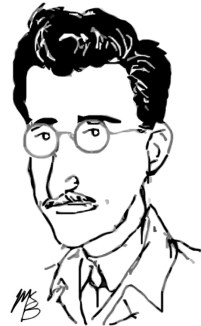
George Renison, who, during the Second World War, was almost blown to smithereens by a land mine, displayed such a talent for leadership during combat that by the war’s end he was in command of the First Canadian Infantry Brigade—a remarkable feat considering he was all of 26 and had gone overseas as the lowest-ranking officer of the 48th Highlanders of Canada.
(James Macgowan, Globe and Mail, 8 Sept 1998, A22)
Born in Hamilton on 25 August 1918, George Everett Bristol Renison was a Trinity College student and son of Anglican Bishop Robert Renison (1875–1957). He went overseas as a lieutenant with the 48th Highlanders in December 1939, and served in the short-lived expedition to France in June 1940 before returning to Canada to take a junior staff course at the Royal Military College.
He went overseas again as a brigade staff officer and served in the Sicily and Italy campaigns. While attached to 1st Canadian Division headquarters, in May 1944, his jeep exploded from a landmine. Two occupants were instantly killed but Renison was pulled alive from the wreckage. After recovering from the life-threatening wounds, he was invalided to England. With a promotion to lieutenant-colonel at the age of only 25, Rension became an instructor with the War Staff College at Camberley.
In April 1945, with I Canadian Corps redeployed from Italy to Northwest Europe, Renison replaced Major G.A. Ross in command of the Hastings and Prince Edward Regiment. The appointment of an “outsider” who had not even served with the regiment struck Farley Mowat as “a deliberate slight on a firstrate officer and on the Regiment itself.” Mowat, however, admitted that the new CO, “coming into what might have been an unpleasant situation, showed considerable understanding of the unit’s feelings and the new effectiveness of the Regiment was unimpaired when, on April 12, it moved forward into action.”
Renison led the Hasty Ps through its final battles in the liberation of the Netherlands. He would later relate the unusual circumstances accepting the surrender of a German SS general. When his defeated enemy missed the agreed upon meeting time. Renison kicked in the door to the general’s room:
The general was in bed. He shot up then realized that he was naked snuggled down again in the bed like a girl caught in an embarrassing situation. Indeed had a girl with him who had much more discipline and respect for authority. Startled as they were, her discipline prevailed. She leapt to her feet in the presence of senior officers, stark naked, and as I remember, extraordinarily well-built, snapped to attention, flipped up her hand with the Nazi salute and said “Heil Hitler.” That’s when I knew that the war was really over and I really knew we had won.
A month after VE-Day, Rension was promoted to the 1st Infantry Brigade, and Ross resumed command of the Hastings and Prince Edward Regiment until demobilization.
Renison unsuccessful contested the provincial riding of Bellwoods for the Progressive Conservatives in the 1948 Ontario general. He lost by over 1,200 votes to the Communist MPP A.A. MacLeod. “They seek to disturb and weaken,” the colonel said of communists, “by lies and misrepresentation, the social structure around us and have mislead many good Canadians in this way.”
Having established himself as a successful businessman, Rension became Chancellor of Renison College (named after his father) at the University of Waterloo in 1986. From 1992 he was Chancellor Emeritus until his death in Toronto on 30 July 1998.
 World War Graphic History