Lieutenant-Colonel Bill Reid
Perth Regiment
Royal Canadian Regiment
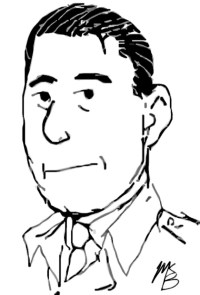
Bill Reid proved to everyone in the regiment that he wasn’t the kind of battalion commander who directs his men from well out of the line of fire. He was up there on the crest, right in the thick of it with the rest … For his bold and determined leadership for the regiment’s unexcelled performance in the Gothic Line, Reid won for himself and the regiment the second highest battlefield award, the Distinguished Service Order. We were pretty damn proud of him, and pretty damn proud of ourselves too, for what we’d accomplished.
(Stanley Scislowski, Not All of Us Were Brave, 271)
Born in Charlottetown, PEI on 1 February 1913, William Wright Reid was an all-round sportsman and militia officer with the PEI Highlanders. He transferred to the Princess Louise Fusiliers in July 1942 to be second-in-command and succeeded Lieutenant-Colonel H.S. Robinson in July 1943. The motorized infantry battalion was then re-designated 11th Infy Bde Support Group which deployed to Italy alongside the 5th Armoured Division in late 1943.
In February 1944, Reid transferred from command of this machine gun unit to the Irish Regiment of Canada as second-in-command. When Brigadier J.S.H Lind was elevated to 11th Infantry Brigade on 14 August 1944, Reid was promoted to be his successor in command the Perth Regiment.
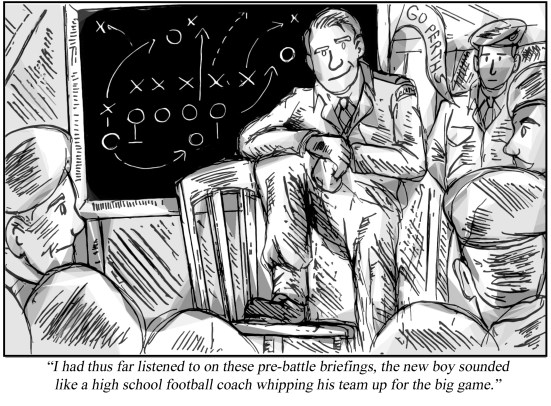
According to Rifleman Stanley Scislowski, “My first impression of the new CO was that he seemed to be a reasonably nice fellow, but like every other high-ranking officer I had thus far listened to on these pre-battle briefings, the new boy sounded like a high school football coach whipping his team up for the big game, with all that rah-rah stuff. We’d heard it all before, and fancy rhetoric didn’t sit well with us.”
While Scislowski and some of the soldiers may have balked at Reid’s enthusiastic rhetoric, they quickly came to appreciate his courage. Just two weeks after taking command, the new CO led them through what the unit history called “some of the briskest days in the Regiment’s fighting career.” For his heroic leadership in the frontline defence at Point 204, Reid earned the D.S.O.:
On the night of September 1, both the German 26th Panzer Regiment and 4th Parachute Regiment made repeated counter attacks to dislodge the toe hold made in the Gothic Line. Bitter hand to hand fighting ensued with trenches changing hands several times. The morning saw the Perths still there.
 Twice wounded in the fierce fighting, Reid relinquished command after just eighteen days to Major M.W. Andrew. He resumed temporary command for three weeks in late September while Andrew was hospitalized of an operation. At the end of this second tenure, Reid fell sick from malaria and require hospitalization himself.
By early December 1944, Reid took command of the RCR following the removal Lieutenant-Colonel Jim Ritchie. Major Strome Galloway, who had clashed with the last two COs—Permanent Force officers with no prior combat experience—saw the arrival of a decorated fellow militiaman. However, the irascible Galloway had a difficult relationship with him too:
I tried to support the new CO as best I could. He was a nice enough fellow named Bill Reid, who had won the DSO at Coriano Ridge, commanding the Perth Regiment. Unfortunately, we did not see eye to eye on most things and the tension between us was obvious to all.
(Strome Galloway, The General Who Never Was, 242)
In March 1945, the regiment redeployed from the stalemate at the Gothic Line in northern Italy to the liberation of the Netherlands, with Reid remaining in command until the end of the war in Europe. In summer 1945, he returned to Canada to take command of the new RCR battalion attached to the Pacific Force, before Japan’s surrender in September.
Reid retired from the army as a brigadier in 1955. For his advocacy of sports, he received the Order of Canada in 1974 and was inducted into the PEI Sports Hall of Fame in 1985. He died in Charlottetown two years later.
 World War Graphic History