Brigadier T. Eric Snow
Royal Canadian Regiment
11th Infantry Brigade
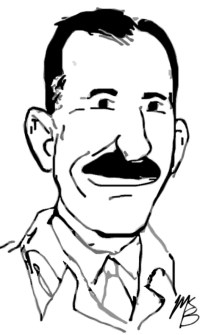
Under no circumstances must I nag or hound my Bn. Comds while they are conducting their battle even though I am being pressed by my own comd … To hound Bn. Comds when they are doing their best and things are going well will only cause disorganization and perhaps adversely affect the results of the battle.
(Brig. Snow, 11 Cdn Inf Bde Report on the Battle of the Liri Valley, May 1944)
Born on 15 January 1905 in Kimberley, South Africa, Thomas Eric D’Oyly Snow was the son of a British Army officer who emigrated to Canada in 1907. The family settled in New Brunswick and Snow followed his father in an army career. He joined the St. John Fusiliers and qualified as a lieutenant in 1924. With fifteen years in the Permanent Force, he went overseas with the RCR in December 1939. Following the brief service in France in June 1940, Snow held an equally brief temporary command of the regiment from 21 October to 30 November 1940.
In December Lieutenant-Colonel M.K. Greene, who had been CO from 1935 to 1938, took command of the RCR, however, he proved unsatisfactory to many officers and men. By July 1941, Snow was back in command with a promotion to lieutenant-colonel. In February 1943, he was appointed commandant of the Canadian Training Wing in England and command of the RCR passed to Major R.M. Crowe.
In October 1943, Snow returned to Canada to become commandant of the Officers Training Centre at Brockville, Ontario. After this long period on training and instructional duties, he finally received an opportunity for active service overseas. In February 1944, he took command of the 11th Infantry Brigade from George Kitching in the Italian Campaign.
He had a difficult relationship with Major-General Bert Hoffmeister of 5th Canadian Armoured Division, who found Snow overcautious and indecisive as a brigadier. During the Liri Valley campaign in May-June 1944, Snow followed orders slowly and failed to press his battalion commanders to make rapid adjustments to the situation. He described the difficult circumstances fighting in Italy:
The going was very bad. The country was extremely close and can be likened in places to bush country in Africa … shelling and mortaring were very heavy during the whole time. The GOC [Hoffmeister] was with me and he was continually urging that we get on, that the advance was much too slow and that something must be done.
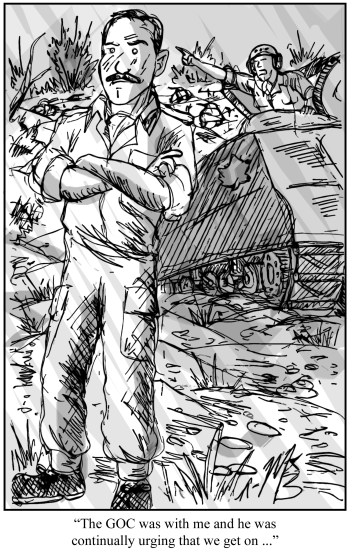 After the brigadier criticized Hoffmeister directly for such “nagging” in his after-action report, the general submitted an adverse report on Snow, writing, he “does not possess the strength of character or ability to comd an inf bde inactive ops.” Snow protested but was replaced by Lieutenant-Colonel Ian S. Johnston of the 48th Highlanders, who brought a renewed sense of aggression to the 11th Brigade, which his predecessor allegedly lacked.
Following his unceremonious exit, in August 1944, Snow succeeded Brigadier Milton Gregg in charge of the Canadian School of Infantry in Vernon, British Columbia. After a long military, diplomatic, and philanthropic career, he was awarded the Order of Canada on 11 July 1988.
Snow died in Fredericton, New Brunswick on 13 March 1996.
 World War Graphic History