Lieutenant-Colonel M.K. Greene
Royal Canadian Regiment
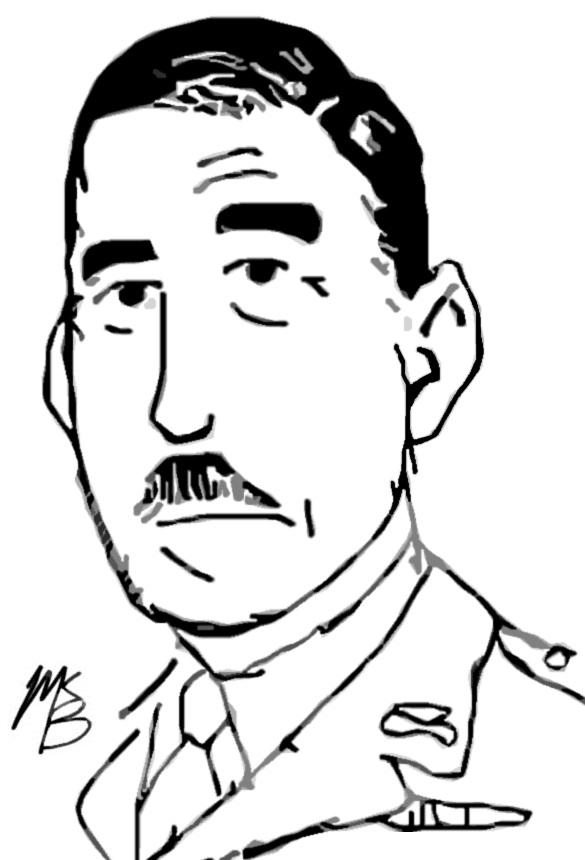
Now, after only two months of being commanded by Murray Green [sic], it had slipped badly and discipline was suffering. Green did not appear to be interested in the welfare of the men. I told the General that, according to reports from the Regiment, Murray Green went up to London almost every night, leaving his driver outside in the army station wagon during the air raids, and did not leave London until about 2:00 am.
(Kitching, Mud and Green Fields, 107)
Born in Montreal on 17 February 1888, Murray Kirk Greene was an RMC graduate, First World War veteran, and former commanding officer of the RCR from 1935 to 1938. He had been commissioned in the Permanent Force in 1910 and served as a staff officer during the war. He relinquished command of the RCR to Lieutenant-Colonel K.M. Holloway on appointment to Military District No. 13. In this position he organized mobilization efforts in Alberta at the start of the Second World War.
In October 1940, Lieutenant-Colonel Vernon Hodson, who had led the RCR overseas was promoted to brigadier. Following a temporary replacement by Major T. Eric Snow, Greene took over in December. The change in command proved unsatisfactory to many officers and men who felt the fifty-three-year-old colonel disinterested and selfish.
Major Neil Hodson, son of the former CO, alleged that Green made frequently late-night outings to London, harming unit discipline and morale. When staff officer and former RCR captain George Kitching brought these concerns to General George Pearkes of 1st Canadian Division, he recommended Greene’s removal. Writing to General A.G.L. McNaughton, Pearkes explained: “Although Lt-Col. Greene has considerable administrative ability, a high sense of personal integrity and honour and a charming personality, I do not think he is likely to develop into a successful commander of a brigade in a field formation because of his lack of tactical knowledge and promptness of decision.”
By July 1941, Snow resumed command of the RCR and Greene was shuffled off to a staging camp and then to the Canadian Reinforcement Units. After authorities intercepted his telephone calls with a civilian woman, he needed to be warned about loose talk and the improper use of military vehicles. He was not charged with violating security regulations but cautioned “to be extra guarded in his conversations in future.”
After two more years stationed in England and as one of the most senior lieutenant-colonels in the Canadian Army, he hoped for a promotion before retirement. General Ham Roberts advocated on Greene’s behalf, writing to Canadian Military Headquarters, “that promotion would give him a new lease on life. It would also improve his pension when the time comes.” Roberts acknowledged, “I know he is a bit of a playboy but he gets his work done & if you do consider him for promotion I could put the ‘bee’ on him & ensure that he walks the straight & narrow path!”
The promotion would be denied. In ill health, Greene retired from the army in late 1944 to live in England, where he died on 15 December 1956.
 World War Graphic History