Lieutenant-Colonel K.M. Holloway
Royal Canadian Regiment
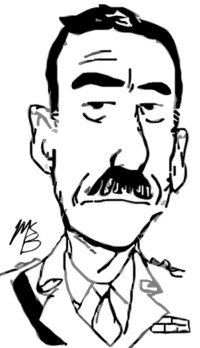
This Officer has had long and distinguished service in the Canadian Permanent Militia. He served with his regiment and on the staff during the 1914-18 war and thereafter held various staff appointments throughout Canada … Since the outbreak of the present war he has been actively engaged in the training and education of the active reserve army.
His instruction and organizing ability, combined with his never flagging keenness, understanding of condition, and helpful attitude, have placed him very high in the regard of all ranks. His zeal and industry are outstanding.
(O.B.E. citation, 9 January 1943)
Born in Montreal 26 February 1890, Kenneth Maitland Holloway was a First World War veteran who had assumed command of the Royal Canadian Regiment in 1938. He had been commissioned in the Permanent Force since January 1912 and went to France with the regiment in November 1915.
After six months at the front he was invalided with neurasthenia. He rejoined the regiment in early August but by the end of the month had been sent home on prolonged sick leave. He returned to the RCR once more in April 1917 but lasted less than a month before being found medically unfit.
He left for Canada in March 1918 to take up duties in Regina before resuming a postwar career in the Permanent Force. He held an appointment as staff adjutant at RMC from 1927 to 1931, when he was promoted to major in command of C company of the RCR in London, Ontario. By 1937, he was in command of B Company in Toronto and became commanding officer of the RCR in November 1938.
The regiment mobilized in September 1939 as part of the 1st Infantry Brigade, 1st Canadian Division. A month prior to departing for England, forty-nine-year-old Holloway was replaced by Lieutenant-Colonel Vernon Hodson, who was in fact six years older.
Not medically fit for overseas service, Holloway was promoted to colonel and posted to Military District No. 2 (Toronto). In 1942, he was assigned to National Defence Headquarters in Ottawa and for his long service and contribution to military training was made an Officer of the Order of the British Empire. After a thirty-four-year army career, he retired in 1946. He died in Halifax in 1970.
 World War Graphic History