Lieutenant-Colonel T.R.A. Stannus†
7th Bn., Leinster Regiment (Royal Canadians)
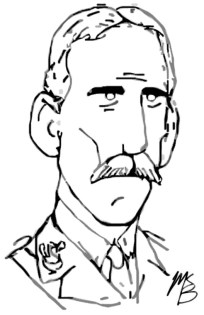
Although severely wounded, and thereby unluckily precluded from leading them to the attack his careful supervision and preliminary preparations undoubtedly ensured the success which his men attained. His adjutant was wounded at the same moment, but Lieut.-Colonel Stannus declined all aid until the other officer had been attended to. He had previously done splendid work when acting as O.C., on one occasion frustrating a raid with great loss to the enemy, entirely through personal foresight and grasp of the situation.
(Lt. Col. Stannus, D.S.O. citation, 18 Sept 1917)
Born on 29 September 1870 in Clonygowan, Ireland, Thomas Robert Alexander Stannus was a long serving soldier and Boer War veteran. He was taken prisoner and later wounded in action with the Imperial Yeomanry in South Africa. Having served with the Leinster Regiment since 1889, he retired to the Special Officer Reserve in April 1914. On the outbreak of the Great War, he rejoined the 4th (Extra Reserve) Battalion at the rank of major.
He transferred to the new service battalion, 6th Leinsters, and landed at Gallipoli in August 1915. While leading a company he was wounded and put out of action. By October 1916, he was in France serving as second-in-command of the 7th Leinsters. When acting Lieutenant-Colonel H.W. Gaye fell ill in February 1917, Stannus assumed command.
In anticipation of the assault on Messines Ridge in June, he developed a careful training plan for the battalion. When the original 7th Leinster commander, Lieutenant-Colonel G.A.M. Buckley, returned to the field in May, he was so impressed with this preparation that he convinced the brigadier to allow Stannus to lead the operation. The decision would prove fateful.
During the Battle of Messines, shortly after Zero hour, a shell exploded at the doorway of battalion headquarters. With a piece of shrapnel puncturing his lung. Stannus lingered for another ten days but died of the severe wounds on 17 June 1917. He was posthumously awarded the Distinguished Service Order.
According to regimental historian F.E. Whitton, for the 7th Leinsters the news “tempered the feelings of triumph with real sadness”:
He was universally loved by all in the Battalion and many out of it. Fearless, untiring, helpful on all occasions, cheery in all circumstances, his foresight was remarkable, his personality magnetic. All rank mourned a close personal friend and a fine commanding officer. “The Little White-haired Man” was known to many besides the Leinster Regiment.
 World War Graphic History
Wonderful to read such glowing quotes about my Great-Great-Grandfather. Achieving a DSO & Legion d’honneur for his service was quite something in an era of unimaginable bravery.
Thank you from keeping his & their memory alive